
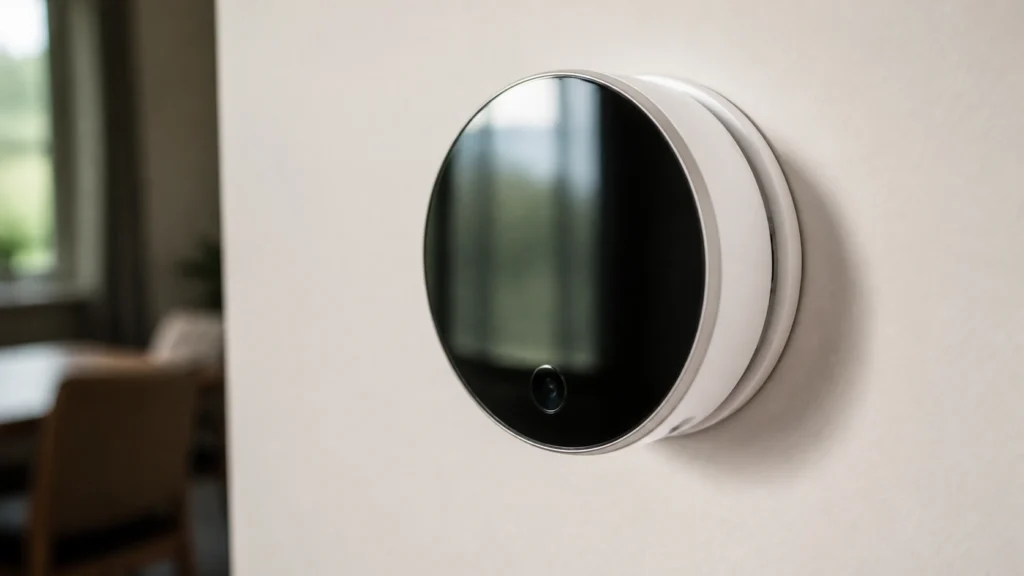
Key Takeaways
- A custom optical window optimizes infrared transmission for smart thermostat sensors while offering design flexibility for touch interfaces.
- Borosilicate and aluminosilicate glass provide durable, scratch-resistant surfaces suitable for high-touch environments.
- Anti-reflective and anti-smudge coatings enhance display clarity and user experience.
- Custom CNC drilling and edge profiling allow seamless integration into appliance enclosures.
- Typical lead times range from 2-4 weeks for samples and 4-6 weeks for production, with low MOQ options available for prototypes.
OEM and ODM Scope for Precision Glass Components
For smart thermostat manufacturers, our factory supports two engagement models. OEM (build-to-print) is ideal when you have finalized 2D drawings and specifications; we faithfully execute your design with tight tolerance control. ODM (collaborative design) is suited to early-stage projects where you bring a concept, a sketch, or a set of performance requirements, and our engineers propose glass grades, dimensions, and coating stacks to meet both optical and mechanical demands. Either path gives you a single source for appliance cover glass, display windows, and sensor protection components.
Customizable Attributes: From Substrate to Surface
Virtually every parameter can be tailored to your smart thermostat design:
- Base material: Choose from soda-lime, borosilicate, aluminosilicate, or sapphire optical window glass, depending on impact resistance, IR transmittance, and cost targets.
- Geometry and thickness: Flat, 2.5D contoured, or bent profiles are possible. Thickness typically ranges from 0.3 mm to 3 mm, with tighter tolerances available upon request.
- Edge treatment: Options include seamed edges, C-edge rounding, pencil polishing, and CNC-machined cutouts for buttons, indicator lights, or ambient sensors.
- Printing and masking: Screen-printed enamel borders, opaque areas, and icon markings can be applied to the front or rear surface, with precise alignment to the display active area.
The Customization Workflow: Step by Step
A typical project moves through the following stages:
- Drawing review and DFM: You send us a drawing or brief. Our engineers run a design-for-manufacturability check, flagging potential stress points, coating edge clearances, or registration challenges. We return a quotation with feasibility notes within a few business days.
- Sampling: Once the tooling (if needed) is ready, we produce a small batch of prototypes. These samples reflect the same process chain that will be used in mass production.
- First-article inspection (FAI): Each prototype undergoes full dimensional, optical, and cosmetic inspection. We provide a detailed report alongside the samples so your engineering team can verify conformance.
- Approval and production: After you sign off on the samples, we lock the process parameters and move to the agreed-upon production volume, with in-line quality checks at every station.
Coating and Value-Added Options
Surface treatments transform a bare glass blank into a functional component:
- Anti-reflective (AR) coating: Reduces glare on the thermostat display, improving readability under varying room lighting. Broadband AR covers the visible spectrum; narrowband AR can be optimized for specific wavelengths used in proximity or gesture sensors.
- Mirror and semi-mirror coatings: Create a glossy, modern look for the bezel area while maintaining transparency over the display window.
- ITO conductive coating: Provides EMI shielding for the internal electronics without affecting optical clarity. Can be combined with index-matching layers.
- Hydrophobic / oleophobic topcoat: Anti-fingerprint and easy-to-clean surface that keeps the smart thermostat glass smudge-free in high-touch household environments.
- Chemical strengthening and thermal tempering: Enhance surface compressive stress, making the glass resistant to scratches and impact—important for wall-mounted appliances that may be accidentally bumped.
Tooling, MOQ, Lead Times, and Quality Assurance
Custom shapes often require a dedicated fixture or press mold, which incurs a one-time tooling charge. The charge depends on glass type, part complexity, and required precision. Minimum order quantities (MOQ) are influenced by the substrate and processing steps; we typically work with mid-sized to high-volume production, but we remain open to discussing pilot runs. Prototype lead times can range from 10 to 15 business days after drawing approval, while mass production usually starts 4 to 6 weeks after sample confirmation. Throughout the project, we safeguard your intellectual property: mutual NDAs are signed at the inquiry stage, and all technical data is stored on access-controlled servers. During production runs, our QA team employs statistical sampling based on AQL standards, conducts regular first-off/last-off checks, and provides certificates of conformance with each shipment.
Start Your Custom Optical Window Project
Every smart thermostat model presents a unique blend of aesthetic and functional needs. Whether you are optimizing IR transmittance, reducing reflection, or matching a bezel color, our engineering team can help you translate requirements into a production-ready glass window. Send your drawing, concept sketch, or a brief description of your optical and mechanical specifications, and we will respond with a feasibility review and pricing indication.
Optimizing Optical Performance for Smart Thermostats
A custom optical window for a smart thermostat must balance infrared transmittance, touch durability, and visual clarity to ensure reliable sensor function and a premium user experience. Whether the device uses a passive IR sensor for presence detection or a touchscreen display, the glass cover must transmit specific wavelengths while withstanding daily use.
Key Facts for Smart Thermostat Glass Windows
- Typical spectral range: 400 nm to 1100 nm for visible and near-infrared transmission.
- Anti-reflective coatings can boost transmission to 99% or higher.
- Thickness options from 0.5 mm to 3.0 mm are common for appliance covers, with custom thicknesses available up to 10 mm.
- Surface hardness up to 7H (pencil hardness) achievable with chemical strengthening.
- Standard dimensional tolerances of ±0.1 mm, with precision down to ±0.01 mm for critical fits.
Material Selection for Infrared Transmittance
The choice of glass substrate directly impacts IR transmission, thermal stability, and mechanical strength. Soda-lime glass provides a cost-effective solution for basic display covers, while borosilicate glass (such as Borofloat 33) offers low thermal expansion and high transmission in the near-IR range. For enhanced scratch resistance, aluminosilicate glass (like Corning Gorilla Glass) can be chemically strengthened to withstand frequent touch. In demanding sensor applications, sapphire delivers extreme hardness and broad spectral transmission from UV to mid-IR, though at a higher material cost. Our engineers help you select the optimal substrate based on your optical, mechanical, and budget requirements.
For thermostats using infrared proximity or ambient light sensors, a dedicated infrared window glass might be specified to maximize sensitivity at 850 nm or 940 nm while blocking unwanted visible light.
Surface Treatments and Coatings
Custom coatings elevate the functional and aesthetic performance of the window. A broadband optical window coating such as anti-reflective (AR) treatment minimizes glare on touch displays and improves contrast. For smart thermostats with capacitive touch, an anti-smudge (oleophobic) coating reduces fingerprints and eases cleaning. Selective printing of opaque borders or IR-transparent inks allows seamless integration with the device’s bezel design. Our in-house PVD coating systems apply durable, pinhole-free layers that meet environmental testing standards.
When specifying an AR optical window, the coating can be tuned to the visible spectrum (420-680 nm) for display clarity or extended into the near-IR for dual-sensor applications.
Consolidated Customization Overview
The table below summarizes the key customization aspects available for smart thermostat optical windows, drawing from the full range of services described.
| Aspect | Options / Capabilities | Notes |
|---|---|---|
| Material | Soda-lime, Borosilicate (e.g., Borofloat 33), Aluminosilicate (e.g., Gorilla Glass), Sapphire | Selection based on optical, thermal, and durability needs. |
| Thickness | 0.3 mm to 10 mm | Common for thermostat covers: 0.5–3.0 mm. |
| Dimensional Tolerance | Standard ±0.1 mm; precision ±0.01 mm | Tighter tolerances available with CNC grinding. |
| Surface Quality | 40-20 scratch-dig (standard); 20-10 (precision) | Per MIL-PRF-13830 or ISO 10110. |
| Edge Treatment | Ground, polished, beveled, rounded | Custom profiles per assembly needs. |
| Coatings | AR, anti-smudge, ITO, mirror, printed borders | Designed for display visibility or touch feel. |
| MOQ | Low MOQ for prototypes; volume production available | Flexible to support NPI and scaling. |
| Lead Time | Samples: 2–4 weeks; Production: 4–6 weeks after approval | Dependent on complexity and capacity. |
| Certifications | ISO 9001, RoHS, REACH | Material and process compliance. |
To discuss your specific optical window requirements, send your drawing or a brief description of your project. Our engineering team will provide a feasibility review and a quotation within 2 to 3 business days. We support OEM and ODM projects from initial concept through mass production, protecting your intellectual property throughout.
Frequently Asked Questions
What types of glass are best for smart thermostat display windows?
Borosilicate glass like Borofloat 33 offers excellent near-IR transmission and thermal stability, common for sensor windows. Aluminosilicate glasses such as Gorilla Glass provide high scratch resistance and can be chemically strengthened. Soda-lime is a cost-effective choice for basic covers, while sapphire is used when extreme durability is required.
Can the glass be anti-reflective and anti-smudge?
Yes, custom optical windows can receive multiple coatings. A broadband anti-reflective coating reduces glare and improves display readability, while an oleophobic (anti-smudge) top layer repels fingerprints and eases cleaning. These coatings are applied via PVD and are durable enough for appliance use.
What is the typical lead time for custom thermostat glass?
For most projects, samples are delivered in 2 to 4 weeks after drawing confirmation. Once the sample is approved, mass production typically requires an additional 4 to 6 weeks. Exact lead times depend on complexity, material availability, and coating requirements.
Is there a minimum order quantity?
We offer low MOQ for prototype and small-batch runs to support new product introduction. Volume production can then scale to meet full commercial demand. Exact quantities are quoted per project based on design and processing needs.
How do I ensure the glass fits my device's bezel?
Our engineering team works from your 2D/3D drawings or samples to define exact dimensions and edge profiles. We offer CNC grinding and drilling to achieve ±0.1 mm or tighter tolerances. First-article inspection reports confirm conformance before production.