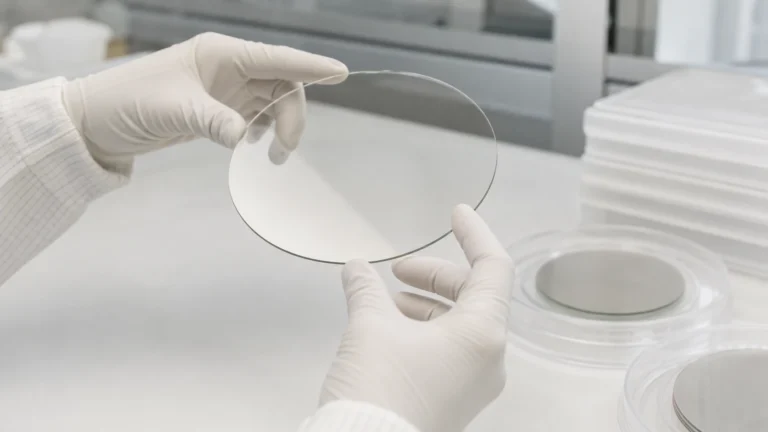
7-Micron Flat Lens Shapes Light into Optical Needle for Deeper OCT Scans
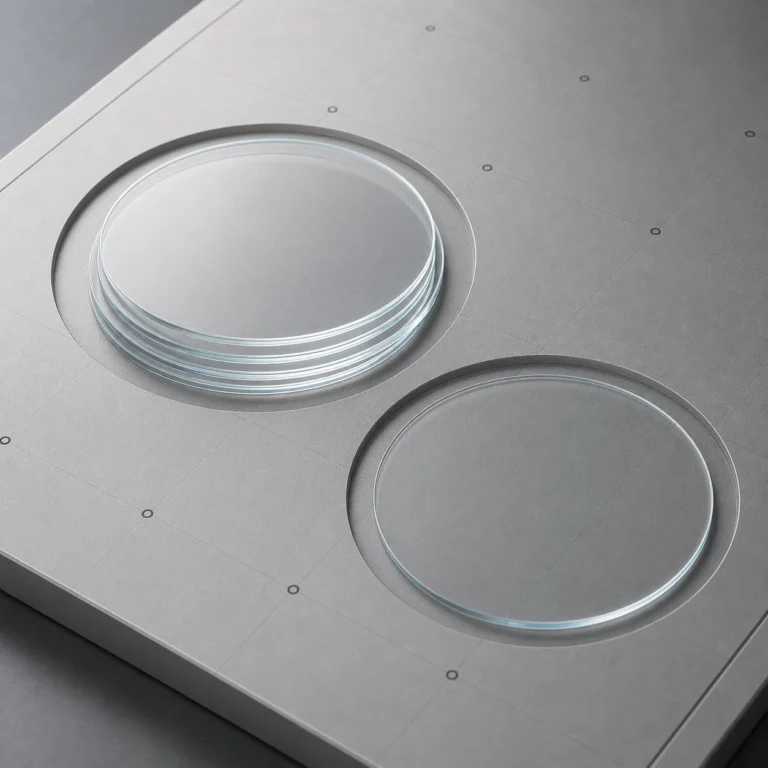
An ultrathin flat lens, just 7 microns thick, produces an optical needle beam that could enable deeper tissue imaging when combined with optical coherence…
Whether a development is driven by money, policy or a major announcement, news stories are easier to judge once the concrete detail is pulled out and checked.
The recurring vocabulary of news reporting — Atomic Scale, Attosecond Science, Compliance Testing, DDR5 and Diffractive Optics — is a useful early indicator of which angle is gaining momentum.
With outlets such as Optics & Photonics News - Optics, Photonics, Physics News and Semiconductor Engineering citing details like 1927, the topic offers something concrete to track — once each figure is checked against the original report.
An ultrathin flat lens, just 7 microns thick, produces an optical needle beam that could enable deeper tissue imaging when combined with optical coherence…
An ultrafast scanning tunneling microscope has simultaneously achieved atomic spatial resolution and sub-femtosecond temporal resolution, reaching the fundamental quantum mechanical space-time limit for the…
A practical field guide from Semiconductor Engineering shows how engineers can use pre-silicon simulation to detect DDR5 signal integrity issues and achieve compliance before…
Recurring prominence usually means Atomic Scale sits at the centre of an active development — a decision, a deal or a dispute. When a name repeats across reports, it is worth reading the underlying stories to see what has actually changed.
Recent coverage gathered here includes reporting from Optics & Photonics News - Optics, Photonics, Physics News and Semiconductor Engineering. No single outlet should be treated as the last word, so for important developments it helps to compare how several sources describe the same event.
Recent reporting has cited figures such as 1927. Numbers like these give a sense of scale and direction, but the exact amount and the context around it are best confirmed in the original article.
Figures such as 1927 reflect what a particular report stated, which can be preliminary or later revised. Treat them as a guide to magnitude and check the source for updates before relying on any single number.