
Key Takeaways
- Ultra-thin glass discs function as optical windows and protective barriers in appliance sensors, directly influencing signal integrity and durability.
- Material selection—borosilicate, fused silica, soda-lime, or sapphire—depends on spectral transmission, thermal stability, and cost targets.
- Precision processes like double-sided lapping, CNC edge grinding, and AR coating achieve surface roughness below 1 nm and scratch-dig as low as 20-10.
- Sourcing from an experienced manufacturer ensures tight tolerances, consistent coatings, and cleanroom packaging that simplifies integration into high-volume assembly lines.
The Need: Reliable Sensor Windows in Appliance Designs
How do you integrate a transparent, durable window into a sensor housing that must withstand moisture, heat, and repeated chemical cleaning? That question drives every engineer tasked with designing sensor assemblies for smart appliances. In modern ovens, washing machines, refrigerators, and HVAC controllers, sensors need an unobstructed yet protected optical path. The ultra‑thin glass disc serving as the front window must deliver high transmission for infrared or visible light, resist degradation from common cleaning agents, and maintain dimensional stability under thermal cycling. Failure in any of these areas leads to sensor drift, false readings, or complete field returns. For procurement teams, the challenge is elevated by the need for a consistent, repeatable component that drops into high‑volume assembly lines with no rework.
Precision Ultra‑Thin Glass Discs: Built for Sensor Integration
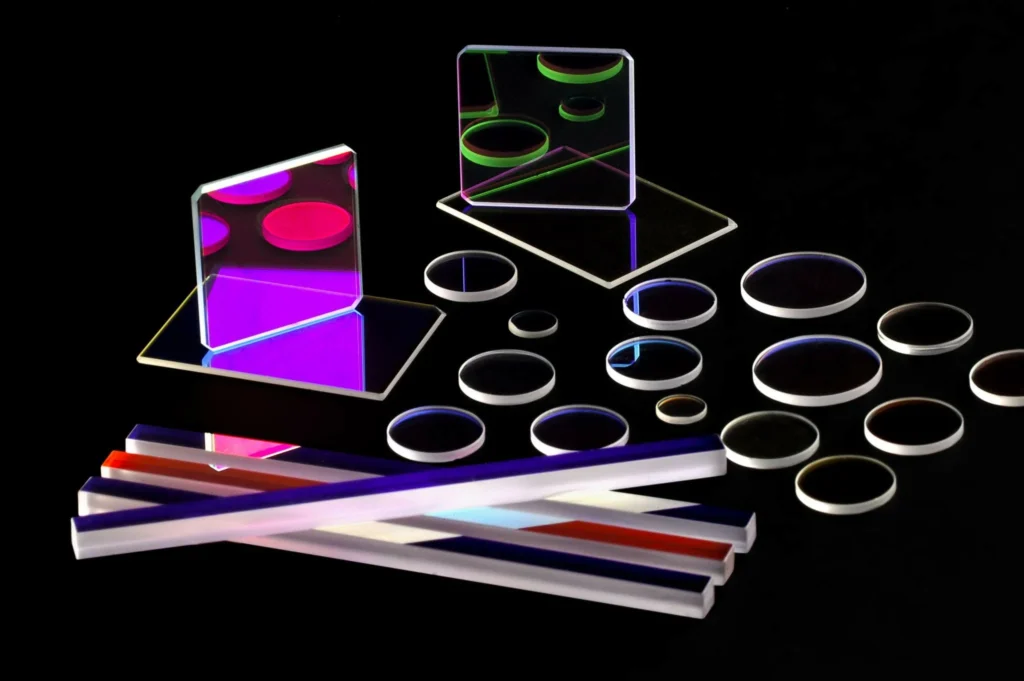
Our ultra‑thin glass discs are manufactured specifically to meet these cross‑disciplinary demands. Available in thicknesses from 0.1 mm up to 1.0 mm, the discs serve as protective windows and optical interfaces in sensor modules. We precision‑cut borosilicate, aluminosilicate, and soda‑lime glass to exact customer diameters using CNC and laser processes that maintain edge integrity. The materials deliver high optical transmission in the visible and near‑infrared bands, with options for low‑iron variants that minimize absorption in longer‑wavelength IR. By combining sub‑micron flatness control with tight thickness tolerance, each disc ensures a uniform optical path—critical for time‑of‑flight, proximity, and capacitive touch sensors. Every disc is supplied in clean, ready‑to‑bond condition, whether for ultrasonic welding, adhesive mounting, or gasketed press‑fit into a plastic housing.
Key Selection Criteria for Appliance Sensor Glass
Early in the design phase, engineers should evaluate five parameters that directly influence long‑term sensor performance:
- Optical Transmission: The glass must exhibit consistent transmission across the sensor’s operating wavelengths. For IR‑based sensors, low iron content reduces attenuation; for visible‑light sensors, high clarity and controlled haze are essential.
- Coefficient of Thermal Expansion (CTE): The disc’s CTE should match or be compatible with the surrounding housing material—typically engineered plastics or aluminum—to prevent stress‑induced cracking or delamination during temperature cycles from −20 °C to 85 °C.
- Surface Flatness and Parallelism: Even minor warpage can distort the emitted or received beam. Specifying flatness better than a few microns across the clear aperture ensures repeatable sensor response.
- Chemical and Mechanical Durability: The exposed surface must resist common household cleaners, oils, and abrasives. Aluminosilicate glasses offer exceptional scratch resistance with high flexural strength, while borosilicate provides broad chemical inertness.
- Regulatory Compliance: For global appliance markets, the glass window often carries RoHS, REACH, and sometimes food‑contact certifications. Early supplier alignment on these requirements prevents costly redesigns.
From Design to Production: A Sensor Window Scenario
Consider a manufacturer developing a new occupancy and light sensor for commercial HVAC diffusers. They require an 18‑mm‑diameter, 0.3‑mm‑thick disc that passes a 940 nm IR signal and sits behind a decorative trim ring. After sharing initial 3D models, our team recommends an aluminosilicate glass for its balance of IR transmission and chemical durability. A prototype run uses laser‑cut blanks, edge‑seamed to a precise chamfer, and coated with a broadband anti‑reflective layer on the inner surface to boost signal‑to‑noise ratio. Twenty discs undergo thermal shock testing (−30 °C to +80 °C, 100 cycles) and exposure to isopropyl alcohol and glass cleaner; transmission deviation stays within ±0.5%. Confident in the result, the customer moves to pilot production, where our automated optical inspection guarantees every disc meets dimensional tolerance before packaging.
Critical Planning Points: Sizing, Coatings, and Logistics
Once the glass specification is settled, attention shifts to integration pragmatics. Provide detailed drawings that capture outer diameter tolerance (typically ±0.025 mm), thickness tolerance (±0.01 mm for ultra‑thin sheets), edge profile (seam, ground, or polished bevel), and surface quality (scratch/dig numbers). If an optical or conductive coating is needed—AR, ITO for EMI shielding, hydrophobic—define the coated area, wavelength target, and adhesion requirements early. Tolerance stack‑up must account for the housing’s thermal expansion and the adhesive gap; a disc that fits perfectly at room temperature may bind or rattle at operating extremes. For logistics, understand that ultra‑thin glass is fragile yet can be shipped safely in custom thermoformed trays. Lead times typically depend on quantity and complexity; we maintain predictable schedules with express prototyping options. Global packaging ensures discs arrive unscathed whether the assembly line is in Monterrey or Shenzhen.
Start the Conversation on Your Sensor Window Project
Whether you are responding to an RFQ for a next‑generation refrigerator touch panel or qualifying a second source for smart‑lock proximity sensor windows, our engineering team is ready to review your specifications. Share your requirements, and we will propose the right glass composition, thickness, and finishing—backed by a scalable production process that protects your supply chain.
Ensuring Sensor Reliability with Ultra-Thin Glass Discs
Ultra-thin glass discs are more than just transparent covers; they are active optical components that determine signal integrity in appliance sensor assemblies. Whether used as an infrared proximity window in a smart lock or a capacitive touch overlay on a refrigerator panel, the disc must deliver consistent transmission, minimal scatter, and resistance to daily wear. Our custom ultra thin glass discs are engineered to meet these demands, combining precision fabrication with application-specific coatings.
Material Selection for Appliance Sensor Windows
Each sensor application imposes distinct demands on the glass disc. Borosilicate (e.g., Borofloat 33) offers low thermal expansion and good chemical durability, making it suitable for oven or dishwasher sensors. Fused silica excels in ultraviolet and infrared transmission, ideal for optical flame detection or spectroscopic sensors. Soda-lime provides a cost-effective solution for basic capacitive touch interfaces, while sapphire—though not a glass—delivers unmatched scratch resistance for high-end or outdoor appliance panels. We guide buyers through this selection, referencing spectral curves and environmental test data aligned with IEC standards for appliance safety.
Manufacturing Precision: From Blank to Finished Disc
Producing a reliable sensor disc requires more than just cutting a sheet of glass. Our process begins with CNC scribing or diamond wire cutting to achieve the exact diameter, followed by edge grinding to remove micro-cracks that could propagate under thermal shock. Double-sided lapping and chemical-mechanical polishing yield a surface roughness below 1 nm Ra and a scratch-dig of 40-20 or better, per ISO 10110. For enhanced transmission, anti-reflective (AR) coatings are applied via magnetron sputtering, tuned to the sensor’s operating wavelength (e.g., 850 nm or 940 nm for common IR LEDs). Each disc is then inspected under laser interferometry and shipped in cleanroom-grade thermoformed trays. For a deeper look into our ultra thin glass processing methods, review our manufacturing guide.
Key Facts for Quick Reference
- Thickness: Custom ultra-thin glass discs from 0.03 mm up to 2.0 mm, with tolerances as tight as ±0.005 mm on thickness uniformity.
- Materials: Borosilicate, fused silica, soda-lime, and sapphire available; all compliant with RoHS and REACH.
- Coatings: Broadband AR, ITO (conductive), oleophobic, and hydrophobic options to increase reliability in touch or exposed sensors.
- Lead times: Prototype quantities delivered in 1–2 weeks; volume production ramps within 4–6 weeks after design approval.
- Quality: ISO 9001 certified facility; part inspection reports included with each shipment.
Sourcing Attributes: What to Specify
To receive an accurate quotation, define the following parameters when you contact our team:
Material and thickness: Choose based on spectral transmission, thermal needs, and strength. For instance, a fused silica disc for ultraviolet sterilization monitoring may require ≥90% transmission at 254 nm.
Diameter and tolerance: Typical discs range from 3 mm to 300 mm in diameter, with standard tolerance of ±0.05 mm; tighter tolerances up to ±0.01 mm achievable.
Surface quality: Specify scratch-dig per ISO 10110; for imaging sensors, a 20-10 finish reduces stray light.
Edge profile: Seamed, ground, or polished edges prevent chipping and facilitate adhesive bonding.
Coating requirements: Indicate wavelength range, desired reflectance, and any durability needs (e.g., abrasion resistance per MIL-C-48497).
Packaging: Standard cleanroom trays or custom dunnage for automated assembly lines.
| Aspect | Key Considerations |
|---|---|
| Application | Protective sensor windows for appliances: touch panels, IR proximity, ambient light, flame detection |
| Material Options | Borosilicate (thermal/chemical), fused silica (UV/IR), soda-lime (cost), sapphire (scratch resistant) |
| Thickness Range | 0.03–2.0 mm; uniformity within ±0.005 mm on request |
| Dimensional Tolerance | Diameter ±0.05 mm standard; down to ±0.01 mm for high-precision fits |
| Surface Quality | Scratch-dig 40-20 typical; 20-10 or better for imaging; Ra < 1 nm available |
| Coating | AR (single- or multi-layer), ITO, oleophobic; wavelength-specific tuning |
| Lead Time | Prototype: 1–2 weeks; production: 4–6 weeks (varies with complexity) |
| Certifications | ISO 9001, RoHS, REACH; cleanroom-compatible packaging |
Discuss Your Sensor Disc Project with Our Engineers
Ready to specify your custom ultra-thin glass disc? Send your drawings and requirements for a prompt quotation and design feasibility review. Our team will respond with material recommendations, tolerance analyses, and a clear production timeline—helping you move from prototype to full-scale assembly with confidence.
Frequently Asked Questions
What is the minimum thickness available for an ultra-thin glass disc used in appliance sensors?
We supply custom ultra-thin glass discs as thin as 0.03 mm. Thickness uniformity can be controlled within ±0.005 mm, depending on material and diameter. Such precision is critical for capacitive touch sensors where consistent dielectric spacing is required.
Which glass material is best for infrared proximity sensors in home appliances?
Fused silica or low-iron borosilicate are often preferred for IR proximity sensors because they offer high transmission in the near-infrared range (800–1100 nm) and low thermal expansion, which prevents warping under temperature changes common in kitchen appliances.
How are ultra-thin glass discs coated to reduce reflection and improve sensor performance?
Anti-reflective (AR) coatings are applied through magnetron sputtering or ion-assisted deposition. Multi-layer dielectric stacks can reduce surface reflectance to below 0.5% at the sensor’s operating wavelength, increasing signal-to-noise ratio. Oleophobic topcoats can also be added for fingerprint resistance.
What surface quality is required for optical sensor windows to avoid signal distortion?
A scratch-dig of 40-20 per ISO 10110 is typical for general proximity or ambient light sensors. For imaging or high-resolution sensors, a 20-10 finish is recommended to minimize scatter. Surface roughness (Ra) below 1 nm further ensures low haze.
Can these glass discs be chemically strengthened to withstand repeated impacts in appliances?
Yes, soda-lime and some borosilicate discs can undergo ion-exchange strengthening to create a compressive surface layer, significantly increasing resistance to scratches and impacts. This is especially useful for touch panels on oven doors or smart home hubs.