
Molded Glass Lens Sector Forecast to Hit $809M by 2034
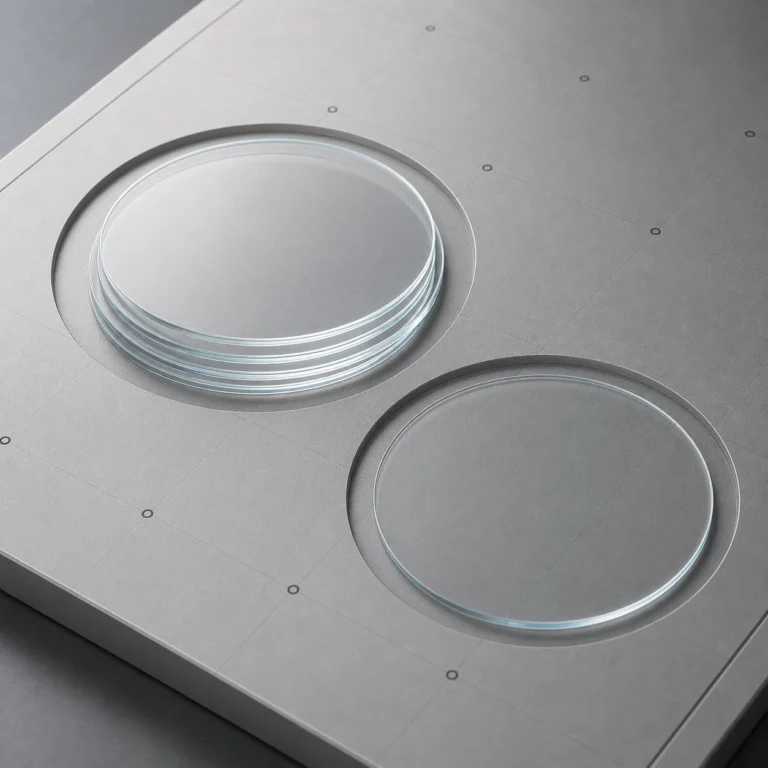
Market Projected to Cross USD 809 Million Mark
The global market for optical glass molded lenses is on track to surpass USD 809 million by 2034, according to a newly released industry forecast. The findings, published in a report by 24chemicalresearch.com, detail a compound annual growth rate (CAGR) of 10.0% over the forecast period.
Molded glass lenses are fabricated through a precision heating and pressing process that forms optical glass blanks into near-net shapes, eliminating the need for extensive grinding and polishing. This manufacturing method has become essential for producing high-volume, complex aspheric optics used across a range of high-tech industries.
Technology and Manufacturing Context
The core process—often referred to as precision optical glass molding—relies on specialized high-temperature molds and meticulously controlled cooling cycles. A typical lens blank, sourced from high-quality optical glass, is heated past its transformation temperature and pressed between two ultra-smooth mold inserts. After forming, the lens undergoes gentle annealing to relieve internal stress and is then coated with anti-reflective layers. This approach slashes production time and cost compared to traditional grinding, especially for non-spherical surfaces.
Advancements in glass material science have been central to the market’s expansion. Newer low-transformation-temperature glasses reduce wear on expensive mold inserts, extending tool life and enabling tighter geometric tolerances. In parallel, improvements in mold fabrication and coating technologies have pushed the achievable surface roughness down to the nanometer scale, meeting the stringent requirements of laser and imaging systems.
The scale of the molded lens market reflects a maturing supply chain. Lens diameters typically range from under 2 mm for micro-optics to over 25 mm for automotive LiDAR receivers, with surface figure accuracy measured in fractions of a wavelength. Production volumes for consumer-grade lenses frequently run into millions of units per month, underscoring the need for automated molding and inspection equipment.
Demand Drivers Across Industries
Consumer electronics remain the largest single driver, with smartphone cameras incorporating multiple molded aspheric elements per module. The push toward ultra-thin form factors and periscope zoom architectures has accelerated adoption. Meanwhile, the automotive sector is emerging as a high-growth vertical: LiDAR systems in advanced driver-assistance systems depend on molded glass lenses for their light weight, thermal stability, and consistent optical quality.
Medical endoscopes and surgical robots also benefit from the miniaturization and optical clarity provided by molded glass elements. In the industrial space, machine vision systems employ these lenses for high-resolution inspection, while the burgeoning augmented and virtual reality markets demand compact, high-index optics that can be mass-produced reliably.
Regional and Competitive Landscape
While the published report segments the market by region, East Asia—particularly China, Japan, and South Korea—has historically dominated both the production and consumption of molded glass lenses, owing to a dense cluster of electronics manufacturers and precision engineering firms. Europe and North America are expected to contribute significant growth through automotive LiDAR and medical device applications.
Investment in new molding capacity is underway at several key optical component suppliers. Competition hinges on mold lifetime, throughput, and the ability to handle an expanding palette of glass types, from standard borosilicates to specialized polymers and chalcogenides for infrared use.
Outlook and Industry Implications
The projected 10.0% CAGR suggests that the optical glass molded lens market will more than double in size over the coming decade. This sustained expansion bodes well for auxiliary industries, including glass feedstock providers, mold material specialists, and coating equipment manufacturers.
Procurement professionals and system integrators are likely to face a diversifying supplier base as new entrants scale up. Standardization efforts, such as those outlined by the International Organization for Standardization (ISO) for optical surface specifications, will play a role in ensuring interoperability and quality benchmarks across this growing trade.
| Aspect | Detail | Significance |
|---|---|---|
| Forecast Market Size (2034) | USD 809 million | Indicates a doubling of market value over the forecast period |
| Growth Rate (CAGR) | 10.0% | Sustained double‑digit expansion fueled by electronics and automotive sectors |
| Core Technology | Precision glass molding | Enables low‑cost, high‑volume production of complex aspheric lenses |
| Key Applications | Smartphone cameras, LiDAR, medical devices, AR/VR | Spans consumer, automotive, industrial, and healthcare domains |
| Regional Hotspots | East Asia, North America, Europe | Cluster of manufacturing and end‑user industries |
| Critical Enablers | Low‑Tg glass, durable mold inserts, AR coatings | Decisive for yield, tool life, and optical performance |
The optical glass molded lens market, driven by relentless demand across high-tech sectors, is forecast to grow at 10.0% annually, reaching USD 809 million by 2034.
Key Figures
This story includes concrete figures such as USD 809 million, 10.0% and 2034. The points below pull out the key numbers so the reporting is easier to scan and verify.
- Projected market size: USD 809 million By 2034, according to the latest industry forecast
- CAGR: 10.0% Compound annual growth rate over the forecast period
- Forecast year: 2034 End of the projection period cited in the analysis
Why This Matters
Precision glass molding is a critical enabler for next-generation optics, allowing compact, aspheric lenses that power autonomous driving sensors and immersive wearable displays. The projected double-digit growth underscores an accelerating shift from traditional lens fabrication, promising cost reductions and design flexibility across high-volume applications.
FAQ
What is the optical glass molded lens market?
It refers to the global commerce of precision lenses made by heating and pressing optical glass into near-net shape, bypassing traditional grinding and polishing. This segment supplies key components for cameras, automotive sensors, and medical devices.
How fast is this market growing?
The market is projected to expand at a compound annual growth rate (CAGR) of 10.0% from its current level to USD 809 million by 2034, driven by increased adoption in consumer electronics and advanced driver-assistance systems.
What factors are driving demand for molded glass lenses?
Demand is fueled by the miniaturization of electronic devices, the need for high-performance optics in autonomous vehicles and augmented reality, and the cost efficiency of molding over conventional grinding for complex shapes.
What does the USD 809 million projection signify for the industry?
It signals a robust, decade-long growth trajectory that could attract new investment in molding technology capacity, stimulate material innovation, and expand the application scope into emerging fields like smart eyewear and LiDAR systems.
Sources
- 24chemicalresearch.com (24chemicalresearch.com)
Source: Bluesky @roysayantan.bsky.social