
NIMO Holo-Optical Glasses Surface on Hacker News With Minimal Fanfare
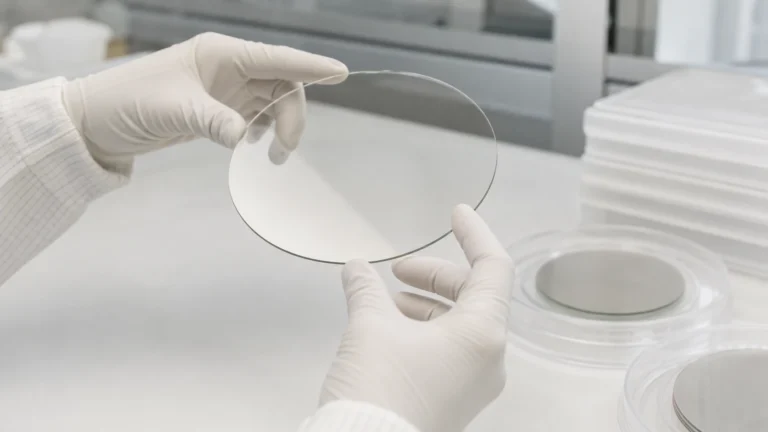
Augmented reality hardware has leaned heavily on advances in optical glass to deliver lightweight, see-through displays. Waveguide combiners, the thin glass plates that direct computer-generated images into the wearer’s field of view, depend on precisely manufactured optical substrates. Against this backdrop a new product, NIMO Holo-Optical Glasses, has made a modest appearance on the technology discussion platform Hacker News, where it received a single upvote and no comments shortly after being posted.
A low-key entry on a developer forum
The submission linked to the website nimoar.com, which appears to be the official product page. At the time of writing the post had attracted minimal engagement, suggesting the launch is either in a very early stage or has not yet been amplified through mainstream marketing channels. The title used on Hacker News—“NIMO Holo-Optical Glasses”—implies a pair of spectacles that combine holographic and optical technologies, but no further technical details accompanied the link.

What the product name hints
Combining “holo” with “optical glasses” points toward a wearable display that uses holographic optical elements (HOEs). Such elements are typically fabricated on thin layers of photopolymer or glass and can perform complex light manipulation tasks—collimating, redirecting, or filtering light—without the bulk of traditional lenses. In AR systems, HOEs are often paired with optical glass material to form waveguides that are both efficient and comfortable for prolonged use. The “NIMO” brand has no widely known track record in the optics industry, raising the possibility of a startup or a project emerging from stealth mode.
Optical glass as the backbone
Whether the device employs diffractive, holographic, or reflective waveguides, high-quality optical glass remains essential. Substrates must exhibit exceptional flatness, low birefringence, and precise refractive indices to avoid image distortion. Corning’s Gorilla Glass and Schott’s Borofloat wafers are common benchmarks, but newer entrants often source custom compositions to improve field of view and brightness. The presence of “optical” in the product name underscores that the lenses are not mere corrective lenses but active optical components capable of overlaying digital content onto the real world.
AR market context and component sourcing
The consumer AR eyewear segment remains fragmented, with heavyweights like Apple and Meta rumored to be preparing devices while smaller companies ship developer kits. A new player entering through a low-key Hacker News submission is not unusual; many hardware projects test community reactions before scaling production. The reliance on optical glass waveguides ties the product to a specialized supply chain. Fabrication requires advanced optical glass grinding, polishing, and often anti-reflection coating steps that add cost and lead time. If NIMO aims to compete on price or performance, its partnership with glass foundries and coating service bureaus will be critical.
Response and next steps
As of now, the Hacker News thread shows no comments, leaving industry observers with little to evaluate beyond the domain name and the promise of holo-optical technology. Typically, such posts either fade into obscurity or are followed by a more detailed launch announcement, possibly accompanied by a Show HN thread where the creator can demonstrate a prototype. Until the nimoar.com site is updated with specifications, the technical community will have to reserve judgment on whether NIMO Holo-Optical Glasses can carve out a niche in the crowded wearable optics landscape.
| Aspect | Details |
|---|---|
| Product name | NIMO Holo-Optical Glasses |
| Website | nimoar.com |
| Initial publicity | Posted on Hacker News with 1 point, 0 comments |
| Core technology | Holographic optical elements paired with optical glass (inferred) |
| Market category | Augmented reality eyewear |
| Company profile | No public record outside the linked domain |
Further details are expected if the product moves toward a full launch or a crowdfunding campaign.
Why This Matters
The entrance of a new AR glasses brand, even with little fanfare, signals continued innovation in optical waveguides—a space where precise glass components define performance. If NIMO delivers on the holo-optical promise, it could push waveguide costs down, a critical factor for mainstream adoption of augmented reality.
FAQ
Who is behind NIMO Holo-Optical Glasses?
No public company information is available. The domain nimoar.com offers no background, suggesting either a new startup or a project from an individual developer.
What are holo-optical glasses?
They are wearable displays that likely use holographic optical elements—thin, often glass-based structures that manipulate light to overlay digital images onto the real world—forming part of an augmented reality headset.
Why did this appear on Hacker News?
Hacker News is a popular forum for technology enthusiasts. Submitting a product link there is a common way for early-stage hardware makers to gauge interest and receive feedback from a technically inclined audience, though this post drew no comments.
What role does optical glass play in this product?
Optical glass serves as the substrate for waveguides and holographic elements. Its quality directly influences the clarity, field of view, and brightness of the virtual images, making it a critical component in AR glasses.
Sources
- nimoar.com (nimoar.com)
Source: Hacker News