
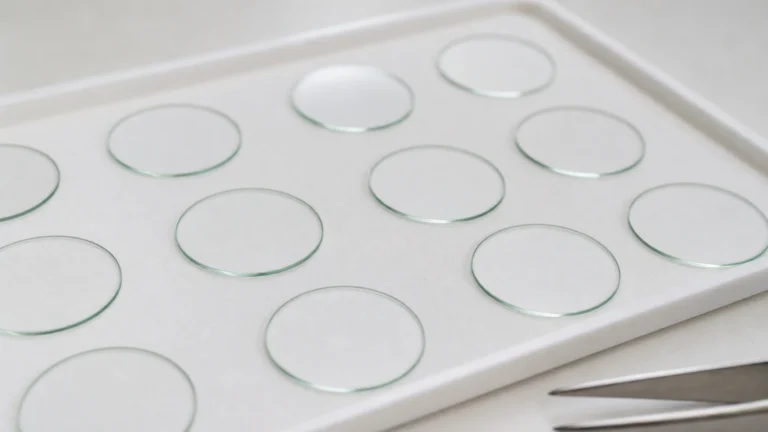
Stacked Fused Silica Wafers Form Ion Trap with Over 100 Ions
A research team has engineered an ion trap using stacked fused silica wafers, demonstrating the ability to confine over 100 ions in two-dimensional arrays…
In Ion Trap, a single figure — a deal value, a percentage change or a target year — can reframe the whole story, which is why the underlying numbers deserve more attention than the headline.
When 2D Arrays and related themes such as 2D Arrays, Fused Silica, Ion Trap, Precision Machining and Quantum Computing keep appearing together, it usually signals a connected development rather than isolated news.
Most of the visible reporting traces back to Bluesky @informaq.bsky.social; a wider source base usually means a development is being covered broadly rather than through a single outlet.
The most recent coverage of ion trap is collected here, ordered with the newest items first. Each report links back to its original source, so the freshest developments — and the dates attached to them — are easy to follow.
A shortage of firm numbers usually means a story is still developing or is being reported qualitatively. In that case, the useful signals are who is reporting, which places feature and how widely the theme is covered; concrete figures tend to follow as events firm up.
Recent coverage gathered here includes reporting from Bluesky @informaq.bsky.social. No single outlet should be treated as the last word, so for important developments it helps to compare how several sources describe the same event.
Recurring prominence usually means 2D Arrays sits at the centre of an active development — a decision, a deal or a dispute. When a name repeats across reports, it is worth reading the underlying stories to see what has actually changed.