
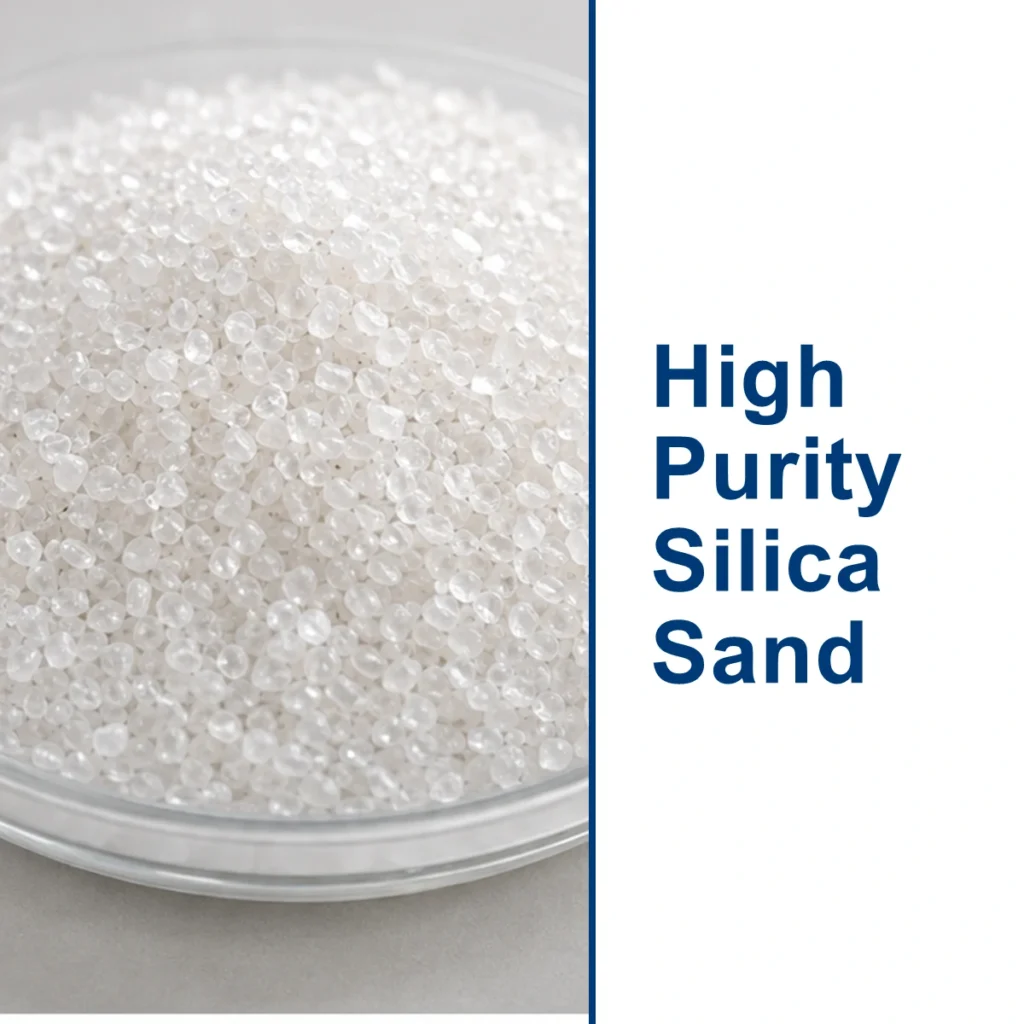
Key Takeaways
- High-purity quartz glass transmits over 90% from UV to IR, with AR coatings boosting transmission above 99%.
- The material's CTE of 0.55 × 10⁻⁶/°C allows it to endure rapid temperature changes without fracture.
- CNC machining with diamond tools achieves tolerances of ±0.05 mm and surface roughness below 1 nm Ra.
- Custom quartz parts are available in small prototype quantities and scale to volume production with clear pricing.
- All parts come with RoHS/REACH declarations and material certifications upon request.
Why Glass Material and Coating Choices Define Custom Machined Part Performance
When sourcing precision machined glass components, the material and its surface finish do more than provide a starting substrate—they directly control optical transmission, thermal endurance, chemical resistance, and mechanical reliability. The wrong pairing can lead to premature failure in high-temperature semiconductor processes, signal loss in optical assemblies, or contamination in medical devices. For engineers and procurement teams, a clear understanding of available glass types and coating options is the most effective way to specify a part that performs consistently over its lifetime.
Available Glass Materials: Labeled Options for High-Purity Demands
High-purity quartz glass—often called fused silica—is the gold standard for UV transmission and thermal stability, but it is not the only choice. A supplier’s material portfolio typically includes several distinct grades, each engineered for specific operational windows. The following categories represent the most common options for custom machined parts.
- Fused Silica (High-Purity Quartz Glass): Synthetic amorphous silicon dioxide with exceptionally low metallic impurities. It transmits deep UV through near-IR, withstands continuous use above 1000 °C, and exhibits near-zero thermal expansion over broad temperature ranges. This material is the baseline when purity and thermal shock resistance are non-negotiable.
- Borosilicate Glass: A silica-based glass containing boron oxide. It offers moderate thermal resistance (typically up to 500 °C) and good chemical durability at a lower cost than fused silica. The visible transmission is high, but UV absorption is stronger. Common in laboratory equipment and viewports where extreme temperatures are not present.
- Soda-Lime Glass: The most economical flat glass, composed of silica, soda, and lime. It transmits visible light well but has poor thermal shock resistance and higher CTE. Suitable for non-critical protective windows or disposable components where cost drives decisions.
- Aluminosilicate Glass: Chemically strengthened variants like gorilla glass provide exceptional surface hardness and scratch resistance. Without strengthening, aluminosilicate still offers better chemical durability than soda-lime and can handle moderate temperatures. Ideal for touch-enabled industrial panels and medical devices that require frequent cleaning.
- Sapphire (Single-Crystal Aluminum Oxide): Not a glass, but often machined alongside glass ceramics. Sapphire is second only to diamond in hardness among optical materials, transmits from UV to mid-IR, and is virtually inert to acids and bases. The cost is significantly higher, limiting it to high-wear optical windows or extreme-environment sensors.
- Optical Glass (e.g., N-BK7, B270): Engineered for refractive index consistency and high transmission in the visible spectrum. These glasses are optimized for lenses, prisms, and beam splitter substrates, but they generally lack the thermal and chemical ruggedness of fused silica or aluminosilicates.
Property Trade-Offs: Transmission, CTE, Resistance, Hardness, and Cost
No single material excels in every category. Fused silica offers the best UV-to-IR transmission and the lowest CTE, but its higher price can rule out cost-sensitive applications. Borosilicate strikes a balance between thermal performance and economy, yet it cannot match the deep-UV transparency of quartz. Soda-lime is inexpensive but fails quickly under thermal cycling. Aluminosilicate brings enhanced strength and chemical resistance, making it a strong candidate for wearable or portable devices, though it softens at lower temperatures than fused silica. Sapphire provides unmatched hardness and scratch resistance, but the material cost and machining complexity often limit its use to smaller, high-value components. Optical glasses are designed for imaging precision, not thermal extremes; they are relatively soft and vulnerable to chemical attack unless protected with coatings.
These trade-offs mean that a semiconductor wafer handler operating at 1150 °C will demand fused silica, while a pharmaceutical inspection window might be acceptably served by borosilicate. The cost delta between the two often reflects the purity of the raw material and the energy required to reach full vitrification.
Coating and Surface-Treatment Options: Enhancing Quartz and Beyond
Even the best substrate can benefit from a surface engineered to manage light, electricity, or moisture. Coatings and treatments are applied after machining to avoid damage during grinding and polishing. The most common options include:
- Anti-Reflection (AR) Coatings: Thin-film stacks that reduce reflection losses to below 0.5 % per surface at a target wavelength. Broadband AR can cover the visible range, while V-coats are narrowband. AR coatings increase transmission but add cost and require careful handling to avoid scratches.
- Mirror Coatings: Metallic (aluminum, silver, gold) or dielectric layers that reflect a specified spectrum. Aluminum is cost-effective for visible and UV; gold excels in IR. Protective overcoats like SiO2 are often added, which extend life but slightly reduce reflectivity.
- Indium Tin Oxide (ITO) Coatings: Transparent conductive films that provide EMI shielding or heating capabilities. On quartz substrates, ITO can be tuned for >90 % visible transmission with sheet resistivity below 10 Ω/sq. The trade-off is a slight reduction in peak transmission and a more delicate surface than bare glass.
- Hydrophobic and Oleophobic Coatings: Fluorinated silanes that repel water and oils, easing cleaning in analytical instruments or outdoor sensors. These monolayers degrade over time with abrasion, so they are best suited for sealed environments.
- Tempering (Thermal Strengthening): Heating glass to near its softening point and then rapidly cooling it creates a surface compressive layer. This increases mechanical strength 3-5 times over annealed glass and causes the material to dice into small fragments on breakage. Not applicable to ultra-high-purity fused silica parts that require dimensional stability, as the process can introduce slight optical distortion.
- Chemical Strengthening (Ion Exchange): Immersion in a molten salt bath exchanges smaller sodium ions for larger potassium ions, creating a deep compressive layer. This is standard for aluminosilicate glasses and can produce a surface hardness approaching sapphire. The limitation is that the part geometry must allow uniform solution access, and the effect diminishes with prolonged exposure to high temperatures.
Matching Material and Coating to Application: A Practical Guide, Plus Compliance Notes
A semiconductor wafer carrier operating in a reducing atmosphere demands high-purity fused silica—any metallic impurities could contaminate the wafer—and typically no coating, as the bare surface is clean enough. By contrast, a laser protection window in a LiDAR unit benefits from both a low-fluorescence fused silica substrate and a broadband AR coating to maximize signal return. For a high-temperature combustion viewport, borosilicate with a heat-resistant mirror coating (gold) can reflect IR back into the chamber while transmitting visible light for observation.
Medical cuvettes often employ aluminosilicate for its chemical resistance and then add a hydrophobic coating so that aqueous solutions bead and roll off. In touchscreen-enabled industrial HMIs, chemically strengthened aluminosilicate with an oleophobic coating maintains fingerprint resistance through thousands of cycles. Where anti-static properties are vital—for example, in a dust-free optics enclosure—an ITO coating on fused silica can bleed charge without significantly attenuating the beam path.
Regarding compliance, all common high-purity quartz glass and borosilicate formulations are inherently RoHS compliant and meet REACH requirements because they contain no substances of very high concern in their bulk composition. Coatings applied by reputable suppliers are also formulated without lead, cadmium, or mercury. However, verify with your supplier that any adhesive-backed films or specialty edge-blackening paints comply with the latest directive. Because requirements differ by region and end-use, always request a declaration of conformity tailored to your part number.
Request a Material Recommendation
Selecting the right glass and coating from the many possible combinations is a detailed engineering exercise. If you need guidance on which substrate and surface finish will best meet your optical, thermal, and mechanical requirements, reach out with your specification outline. Our application engineers can review your parameters and return a recommended material stack that balances performance, longevity, and cost—no guesswork required.
Machining High-Purity Quartz Glass to Your Specifications
Custom quartz glass components begin with material selection and end with CNC grinding, drilling, polishing, and coating — all executed to tight tolerances. Whether you need an optical window, a semiconductor wafer carrier, or a fluidic manifold, the fabrication process matches the demands of your application.
Precision Processes for Complex Geometries
Fused silica and quartz glass are machined using diamond-tipped tools on multi-axis CNC equipment. Common operations include milling, drilling, slotting, edging, and laser cutting. For optical-grade surfaces, lapping and polishing reduce roughness to angstrom-level smoothness. Ultrasonic machining handles brittle materials without micro-cracking, preserving the intrinsic strength of the glass.
Surface Quality and Dimensional Tolerances
Surface finish is specified by scratch-dig (e.g., 60-40, 40-20, 20-10 per MIL-PRF-13830) and roughness (Ra) in nanometers. Flatness can be held to λ/4 or better over the clear aperture for interferometric applications. Dimensional tolerances typically reach ±0.05 mm, with tighter tolerances achievable for small features through CNC grinding and polishing.
Key Facts for Custom Quartz Glass Parts
- High-purity quartz glass transmits over 90% from UV (185 nm) to IR (2.5 µm), making it ideal for spectroscopy and lithography.
- The coefficient of thermal expansion is only 0.55 × 10⁻⁶/°C, so the material withstands rapid temperature swings without fracturing.
- AR coatings can boost transmission to >99% at a single wavelength or over a broad band.
- ITO coatings add electrical conductivity while maintaining optical clarity for heated windows or EMI shielding.
- Machined quartz parts are chemically inert to most acids, bases, and organic solvents, suitable for semiconductor and bioprocessing environments.
Sourcing Considerations: MOQ, Lead Time, and Certifications
As a B2B buyer, you evaluate more than material properties. Here’s what to expect when procuring custom high-purity quartz glass parts:
Minimum Order Quantity (MOQ) – Small-batch and prototype quantities are often accepted, with costs scaling down for higher volumes. Complex geometries or coatings may influence the minimum.
Lead Time – Standard parts without extensive polishing or coating can ship within a few weeks; custom shapes and optical finishes typically extend lead time. Suppliers provide firm schedules upon drawing review.
Certifications – RoHS and REACH declarations are standard. For pharma or food-contact applications, USP Class VI or FDA compliance can be confirmed. Material certificates for purity (e.g., ppm of trace metals) and optical transmission are available.
Packaging – Cleanroom packing with lint-free materials prevents contamination; custom trays or vacuum-sealed bags protect delicate surfaces during transit.
Custom Quartz Glass Part Specifications at a Glance
| Attribute | Typical Range / Options | Notes |
|---|---|---|
| Glass Materials | Fused silica (JGS1, JGS2), synthetic quartz, sapphire, borosilicate | Choose based on UV transmission, thermal needs, and cost. |
| Coatings | AR, mirror, ITO, hydrophobic, DLC | Each adds a function but may limit wavelength range. |
| Surface Quality | Scratch-dig 60-40 to 20-10; Ra < 1 nm to 5 nm | Lapping and polishing achieve optical finishes. |
| Dimensional Tolerances | ±0.05 mm typical; ±0.01 mm possible on small features | CNC grinding with diamond tools. |
| Max. Part Size | Up to 300 mm diameter, thicknesses from 0.2 to 20 mm | Larger sizes possible; consult for custom fixturing. |
| MOQ | From 1 piece for prototyping; price breaks at 100+ | No tooling fees for simple shapes. |
| Lead Time | 2–5 weeks, depending on complexity | Expedited service available for urgent orders. |
Request a Quote for Your Custom Quartz Glass Part
Every order starts with a technical drawing. Submit your 2D PDF or 3D CAD file along with required tolerances, surface finish, and any coating specs. Our engineering team will review the geometry, propose a process sequence, and return a detailed quotation — including lead time and volume pricing brackets.
For optical windows, wafers, or microfluidic chips, specify the Custom High-Purity Quartz Glass material you need, and we’ll match the machining process to your performance targets. Contact us today to start the technical dialogue.
Frequently Asked Questions
What is high purity quartz glass used for in industrial applications?
High purity quartz glass is used for optical windows, lens blanks, semiconductor wafer carriers, UV lamps, and microfluidic chips. Its low thermal expansion and high chemical resistance make it suitable for extreme environments.
How much does high purity quartz glass cost for custom parts?
Pricing depends on part complexity, size, quantity, and required coatings. Simple shapes in prototype quantities may start at a few hundred dollars, while large production runs reduce per-piece cost significantly. A detailed quote is provided after drawing review.
What is pure quartz glass?
Pure quartz glass, also known as fused silica, is a non-crystalline form of silicon dioxide (SiO₂) with low impurities. It offers superior UV transparency, thermal stability, and chemical inertness compared to standard borosilicate or soda-lime glasses.
Why is quartz glass so expensive?
Quartz glass manufacturing involves high-purity raw materials and high-temperature melting processes. Precision machining and optical polishing add cost due to the material's hardness and brittleness, requiring diamond tooling and careful handling.
Can quartz glass be CNC machined?
Yes, quartz glass can be CNC machined using diamond-tipped tools and ultrasonic assistance. Operations include drilling, milling, and cutting, but the brittle nature demands slow feed rates and coolant for crack-free results.