
Laser Welding Creates Permanent Seals for Chemical Waste Glass Containers
The operational reality for hazardous waste management is shifting rapidly. With the accelerating adoption of electric vehicles, the volume of spent battery materials and industrial chemical byproducts requiring permanent disposal is climbing sharply. Facilities must now handle waste streams that demand containment solutions far more robust than conventional steel drums or plastic bins can offer.
The Container Gap Meets Laser Precision
Enter glass containers sealed by laser welding—a technique that promises to meet the exacting standards of Category IV landfills. These specialized disposal sites are designated for wastes that cannot be treated, incinerated, or neutralized, and they impose some of the most stringent containment requirements in the world. Leakage is not an option; environmental protection mandates a barrier that will hold for centuries.

Why Glass and Why Lasers
Glass offers inherent advantages for long-term chemical storage. Unlike metals, it does not corrode when in contact with aggressive acids or alkalis. It is also impermeable, preventing the egress of volatile compounds that could contaminate soil and groundwater. However, traditional glass sealing methods—such as flame fusion or adhesive bonding—often introduce structural weaknesses or organic contaminants that degrade over time.
Laser welding solves this by using focused, high-energy light to fuse glass to glass directly. The process requires no additives, and the resulting seam exhibits mechanical strength comparable to the bulk material. This hermetic seal is crafted at a microscopic level, with minimal heat-affected zones that could create stress fractures.
Inside a Category IV Landfill
To appreciate the significance, one must understand the context. Category IV landfills, as defined by environmental regulators, are engineered for permanent disposal. The U.S. Environmental Protection Agency and analogous bodies globally mandate that containers placed in these facilities must resist degradation from internal and external chemical attack, physical pressure, and temperature cycles. Operational staff must be able to handle and store the containers without risk of breakage.
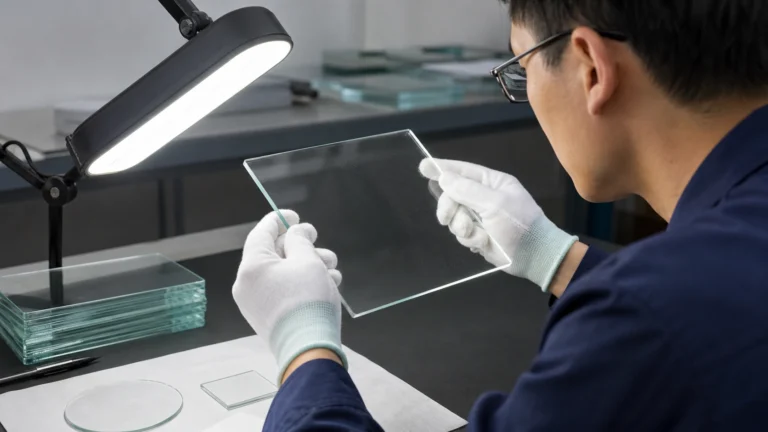
Glass containers that are laser-welded can be designed with thick walls and reinforced shapes, yet remain transparent enough for visual inspection—a key advantage during waste acceptance and monitoring. The technology also allows for the integration of tracking features, such as laser-etched barcodes, without compromising the seal.
From Prototype to Deployment
Recent announcements from research groups and industrial photonics developers signal that the method is moving beyond laboratory tests. Early adopters in the waste management and battery recycling sectors are evaluating pilot programs. The push is fueled not only by regulatory pressure but also by the corporate sustainability commitments of EV manufacturers, who face growing scrutiny over the end-of-life handling of their products.
While no single company or standard has yet dominated, the consensus among experts is that laser-welded glass containers represent a marked improvement over existing options. The process can be automated, scaled, and integrated into existing hazardous waste logistics chains.
Technical Foundations: Laser Glass Machining Meets Harsh Environments
The underlying technique borrows from laser glass machining used in optics and semiconductor fabrication. By precisely controlling parameters such as laser wavelength, pulse duration, and beam profile, manufacturers can achieve a melt zone that cools into a continuous, defect-free joint. For chemical waste containers, this translates into a seal that withstands acidic leachates and alkaline battery electrolytes without leakage.
Moreover, the non-contact nature of the process eliminates the risk of introducing foreign particles that could react with the stored waste. This is particularly critical for wastes containing reactive metals from lithium-ion batteries, where even minute contamination could trigger hazardous reactions.
Next Steps: Verification and Standardization
As with any new containment technology, the path to widespread adoption runs through rigorous testing and certification. Key data points that regulators and industry stakeholders will scrutinize include:
- Long-term leach rate measurements under accelerated aging conditions.
- Mechanical impact resistance per ISO or ASTM standards.
- Compatibility with a range of representative waste mixtures.
- Cost per unit compared to current best-available technologies.
- Scalability of the laser welding process for high-volume production.
These metrics will determine how quickly the innovation moves from niche application to a mandated solution for hazardous waste containment.
| Aspect | Details |
|---|---|
| Container Material | Chemically durable glass such as borosilicate, resistant to corrosion and impermeable. |
| Sealing Technology | Laser welding creates a hermetic, additive-free bond with strength matching the bulk glass. |
| Target Waste Type | EV battery materials, industrial chemical waste, and other hazardous streams requiring permanent storage. |
| Regulatory Driver | Category IV landfill standards mandate long-term containment with zero leakage tolerance. |
| Operational Advantage | Transparent, inspectable, and compatible with automated handling and tracking systems. |
The convergence of photonics innovation and waste management necessity is poised to deliver a safer, more sustainable method for isolating the most dangerous byproducts of the green energy transition. Readers should watch for forthcoming certification results and early deployment case studies reported by sources like Optics & Photonics News and announcements from the U.S. Environmental Protection Agency.
Why This Matters
As the electric vehicle market expands, the volume of battery waste necessitating permanent disposal climbs. Laser-welded glass containers offer a robust, long-term solution that aligns with stringent Category IV landfill standards, potentially reducing the environmental risk of hazardous waste leakage. This technology bridges advanced photonics with critical waste management needs.
FAQ
What problem does laser-welded glass containers solve?
They address the need for safe, permanent storage of hazardous waste from EV batteries and industrial chemicals, ensuring compliance with strict Category IV landfill regulations that demand no leakage over centuries.
How does laser welding work on glass?
It uses focused laser energy to melt and fuse glass surfaces directly, creating a high-strength, hermetic seal without adhesives or additives. The process yields a bond with mechanical properties comparable to the original glass.
Why are Category IV landfills important?
These landfills are designed for hazardous waste that cannot be treated or incinerated, requiring containers that prevent environmental contamination indefinitely. They represent the highest standard of permanent disposal.
What are the advantages over traditional metal or plastic containers?
Glass offers superior corrosion resistance and impermeability, while laser welding provides a reliable, automated sealing process that eliminates weak points and organic contamination, crucial for long-term containment.
Sources
- Optics & Photonics News (optica-opn.org)
- U.S. Environmental Protection Agency (epa.gov)
Source: Optics & Photonics News – Optics, Photonics, Physics News