
Teleporting Quantum States May Solve Photon Loss in Long-Haul Networks
Scientists have identified quantum teleportation as a promising technique to counteract photon loss, a longstanding barrier to extending quantum communication over long distances. The approach, which transfers quantum information without physically sending the particle carrying it, could maintain the integrity of qubits even when individual photons are scattered or absorbed within optical fibres.
The Photon Loss Problem
Photons travelling through standard silica fibres inevitably suffer attenuation. Over a few tens of kilometres, enough photons vanish to make direct quantum key distribution unreliable. Repeaters that measure and retransmit signals—common in classical networks—destroy fragile quantum states, leaving engineers with a fundamental trade-off between reach and fidelity. Networks spanning cities or continents therefore demand a radically different architecture.

How Quantum Teleportation Works
Quantum teleportation relies on a shared entangled pair of photons held by sender and receiver. The sender performs a joint measurement on the qubit to be transmitted and one half of the entangled pair, then sends the classical outcome to the receiver. Based on that message, the receiver applies a corrective operation to the other entangled photon, recreating the original quantum state. Remarkably, the qubit itself never traverses the channel between the parties.
This separation of quantum and classical information is key. Photon loss during the classical communication step does not corrupt the quantum message; classical bits can be resent or reinforced. The quantum channel, in contrast, only needs to distribute entanglement—a task for which loss can be tolerated up to a point through heralding and purification protocols.
Reducing Loss through Entanglement
Because the quantum state is not physically transmitted, teleportation sidesteps the direct link between distance and decoherence. Entanglement distribution itself still suffers from photon loss, but the process can be repeated and verified without compromising the payload. If a pair of entangled photons is lost, the system simply discards that attempt and tries again, without ever exposing the original qubit to the lossy channel. This heralded removal creates a virtual noiseless line for quantum data.
Researchers have demonstrated teleportation over tens of kilometres of fibre, and each improvement in entanglement-swapping efficiency directly extends the feasible range. Combined with quantum memories that store entanglement until needed, the technique can act as a building block for repeater chains that leapfrog individual fibre segments.
Implications for Quantum Networks
A teleportation-based backbone would transform quantum cryptography, distributed quantum sensing, and eventually a full quantum internet. Secure communication between distant nodes could become routine, as the scheme does not require a contiguous path free of photon loss. Financial institutions, government data centres, and research facilities have already begun testing metropolitan quantum links; teleportation-based repeaters could knit these islands into a national fabric.
Engineering Challenges Ahead
Teleportation relies on near-perfect entanglement generation, high-efficiency Bell-state measurements, and low-error classical channels. Today’s photon sources and detectors still introduce enough noise to limit teleportation fidelity, especially over many hops. Maintaining synchronisation across widely separated quantum memories also demands ultra-stable optical references and precise timing. Progress in on-chip photonic integration, however, is steadily bringing the needed components closer to practical readiness.
Industry Context: Optical Components
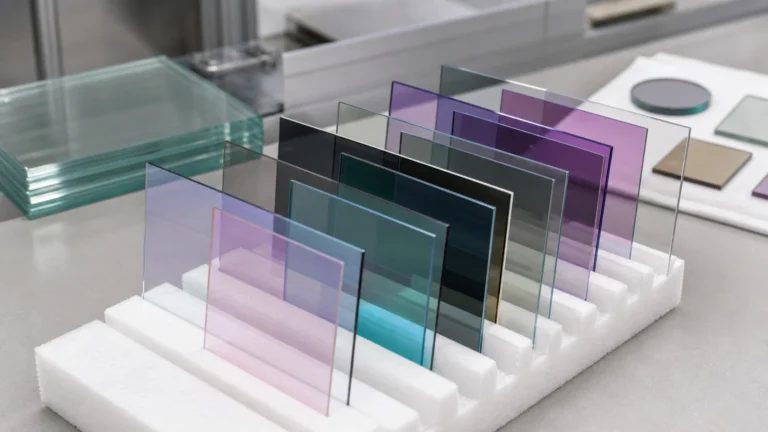
The performance of any teleportation setup depends heavily on the passive and active optics that route and filter single photons. Components such as anti reflective optical window elements reduce unwanted back-reflections that can induce noise, while high transparency glass substrates minimise insertion loss in free-space and fibre-coupled interfaces. In many laboratory demonstrations, the difference between a successful teleportation event and a failed trial comes down to a few per cent of transmission, underscoring the value of precision-engineered glass parts.
Quantum Teleportation at a Glance
| Aspect | Details |
|---|---|
| Problem | Photon loss in fibre limits direct quantum communication to tens of kilometres |
| Solution | Quantum teleportation using pre-shared entanglement and classical communication |
| Mechanism | Qubit is reconstructed at receiver via measurement and correction; it never travels through the lossy channel |
| Key Advantage | Photon loss only affects the classical side channel, which can be resent; quantum state remains protected |
| Primary Hurdles | High-fidelity entanglement distribution, efficient Bell-state measurements, and quantum memory synchronisation |
| Potential Impact | Enables fibre-based quantum repeaters, long-distance quantum key distribution, and modular quantum networks |
The race is on to move teleportation from proof-of-principle to field-deployable hardware. Whether the remaining noise and timing obstacles can be overcome quickly enough to meet the demands of early quantum networks remains an open question.
Why This Matters
This approach tackles a fundamental obstacle to practical quantum networks by using entanglement to bypass photon loss directly, potentially accelerating the development of secure quantum internet infrastructure.
FAQ
What is quantum teleportation?
Quantum teleportation is a process that transfers the exact quantum state of a particle to a distant location without physically sending the particle itself. It uses a shared entangled pair of photons and a classical communication channel to reconstruct the original state at the receiver.
How does teleportation reduce photon loss?
Because the quantum information is never transmitted through the lossy fibre, photon loss only affects the classical side channel, which can readily be resent. The fragile quantum state is reconstructed only after the lossy steps are complete, so it remains intact.
What are the main applications?
Long-distance quantum key distribution, distributed quantum computing, and quantum sensor networks are among the most promising applications. Teleportation-based repeaters could eventually form the backbone of a quantum internet connecting cities and nations.
When will teleportation-based networks be operational?
While laboratory demos exist, field-ready systems face challenges in entanglement fidelity, detector efficiency, and memory synchronisation. Experts estimate that metropolitan-scale teleportation links may appear within five to ten years, with transcontinental networks taking longer.
Sources
- Optics & Photonics News (optica-opn.org)
- Quantum Internet Alliance (quantuminternetalliance.org)
Source: Optics & Photonics News – Optics, Photonics, Physics News