
Researcher Retracts Fused Silica Glassware Idea Over Electrochemical Property Concerns
A public reconsideration of using fused silica glassware in electrochemical experiments has surfaced on social media, with a researcher pointing out that the material’s electrochemical properties would be entirely different, potentially altering or suppressing any observed effects.
The Retraction and Its Context
A brief post on Bluesky, attributed to user @cosmicaug.bsky.social, offered a candid reversal of a previous experimental suggestion. The statement, which had yet to receive any engagement at the time of reporting, read: “Actually, I don’t think my suggestion of using fused silica glassware is good. The electrochemical properties of the glassware will be completely different. This effect will be different and probably extremely diminished (if it can be observed at all).” Without additional details, the post underscores the kind of self-correction that can occur when a researcher re‑evaluates the underlying material science.
Though no experiment is named, the admission highlights how even a seemingly minor substitution in the laboratory—replacing standard glass with fused silica glass—can introduce uncontrolled variables. The user’s willingness to publicly withdraw the idea offers a rare glimpse into the iterative nature of scientific thinking, where an initial hypothesis can quickly be overturned by a closer look at material characteristics.
Why Fused Silica? Understanding the Material
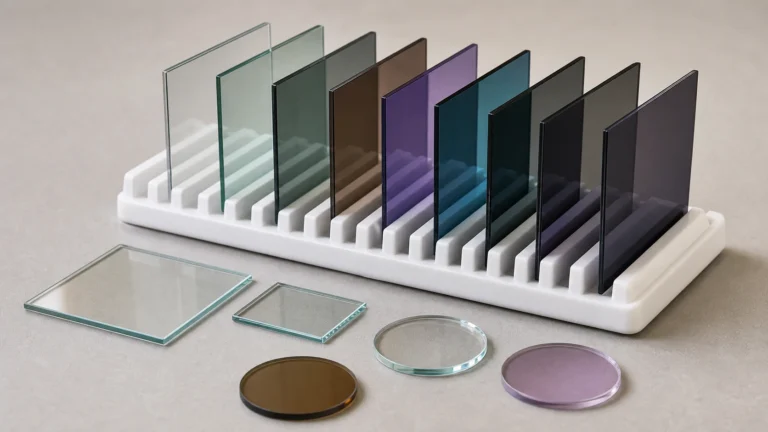
Fused silica is a high-purity, non-crystalline form of silicon dioxide prized for its exceptional thermal and optical properties. Unlike conventional borosilicate glass, it can withstand extreme thermal shock and is extremely transparent across a broad spectrum, making it indispensable in fiber optics, semiconductor processing, and high-temperature labware. Its low coefficient of thermal expansion and near-absence of impurities are often decisive factors when selecting a material for precision measurements or reactions at elevated temperatures.
Lab glassware crafted from fused silica appears in applications ranging from crucibles and boats to custom reactors and electrochemical cells. The thinking behind the original suggestion may have centered on these thermal and purity advantages. However, the electrochemical behavior of fused silica is not simply a passive background; the surface chemistry, ion-leaching potential, and electrical double-layer characteristics can differ markedly from those of soda‑lime or borosilicate glasses. Those differences can transform a well-understood protocol into an unpredictable one.
Electrochemical Properties: The Crucial Difference
Any material that contacts an electrolyte participates in the electrochemical system. Glass surfaces, for instance, can exchange ions with a solution, develop a pH-dependent surface charge, and influence the local electric field at the electrode interface. Borosilicate glasses, containing boron and alkali metals, interact with aqueous solutions in ways that are fairly well documented. Fused silica, being essentially pure SiO₂, presents a different surface: fewer silanol groups and a distinct acid–base behavior that alters the double-layer capacitance and the adsorption of reactants or intermediates.
For sensitive electrochemical measurements—such as those probing trace metal deposition, redox kinetics, or bioelectrochemical signals—these surface effects are not negligible. A change in glassware can shift background currents, modify mass transport, or even quench a catalytic pathway. The Bluesky user’s worry that “the electrochemical properties will be completely different” and that the observed effect would be “extremely diminished” reflects an accurate grasp of interfacial electrochemistry. Even if the original idea seemed plausible on thermal or purity grounds, surface chemistry ultimately commands the outcome.
Implications for Experimental Design
The incident, though informal and lacking a named institution, carries a clear message for laboratories: material selection is never trivial. A glass vessel is not an inert container; it is part of the reaction environment. When a protocol is transferred from one type of glass to another, or when a new material is proposed to solve a practical problem, researchers must evaluate its electrochemical footprint just as closely as its mechanical or thermal figures.
Open platforms like Bluesky are increasingly serving as sounding boards for such micro‑corrections, complementing the formal peer-review process. This post, despite its lack of metrics, contributes to a culture where rapid, transparent re‑evaluation is valued. It also serves as a reminder that even well-intentioned suggestions can be flawed, and that acknowledging those flaws swiftly is part of rigorous scientific practice.
For the wider community, the takeaway is both practical and philosophical: always interrogate the full property profile of any material introduced into an experiment. The thermal resilience and purity of fused silica are assets in many contexts, but they do not guarantee electrochemical neutrality. In fact, they may be precisely the reason an expected signal disappears.
Key Points at a Glance
| Aspect | Details |
|---|---|
| Material | Fused silica (high‑purity SiO₂) |
| Proposed use | Lab glassware for electrochemical experiments |
| Key concern | Electrochemical properties differ from standard glass, potentially altering results |
| Predicted impact | Observed effect would be different, probably extremely diminished |
| Source | Anonymous Bluesky post (@cosmicaug.bsky.social) |
| Implication | Material selection must account for interfacial electrochemistry, not just thermal/optical traits |
As informal analyses circulate and amplify, the case stands as a succinct lesson in material vigilance—one that may prevent others from pursuing dead‑end experimental avenues.
Why This Matters
The post highlights a fundamental but often overlooked truth in laboratory science: a material’s electrochemical interface is as critical as its thermal or optical specifications. By sharing the reconsideration openly, even without formal peer review, the user reinforces good practice in experimental design and demonstrates how social platforms can facilitate rapid, corrective discussion within the research community.
FAQ
Who retracted the suggestion?
An anonymous user on Bluesky, identified only by the handle @cosmicaug.bsky.social, posted the retraction. No further personal details are available.
What is fused silica glassware typically used for?
Fused silica glassware is valued for its high purity, extreme thermal shock resistance, and broad optical transparency. It is commonly used in high-temperature applications, fiber optics, semiconductor manufacturing, and specialized laboratory vessels where these traits outweigh cost or fragility.
Why would electrochemical properties matter?
In electrochemical experiments, the glass container’s surface interacts with the electrolyte, affecting ion adsorption, surface charge, and the electrical double layer. Different glasses have distinct surface chemistries, which can alter reaction kinetics, background currents, and the overall sensitivity of a measurement.
What does this mean for future research?
It underscores the need for careful material selection in experimental design. A glass vessel is not inert; substituting one type for another can introduce variables that may mask or kill a reaction. Researchers should always evaluate the full material profile—including surface chemistry—before adopting a new component.
Sources
- fused silica (heraeus.com)
- Bluesky (bsky.app)
Source: Bluesky @cosmicaug.bsky.social