
Key Takeaways
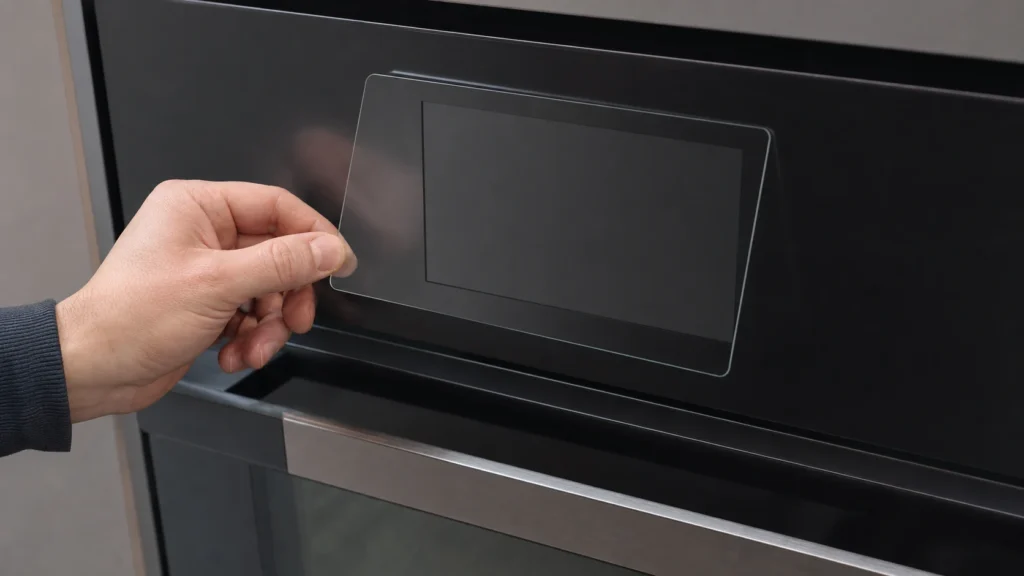
- AR coated glass reduces surface reflections, enabling appliance touch screens to remain legible under bright ambient light.
- Substrate options include soda lime, aluminosilicate, and borosilicate, each providing specific thermal and mechanical advantages.
- Multilayer dielectric AR coatings can achieve over 94% transmittance when applied to both glass surfaces.
- Supply chain planning should account for coating lead times and protective packaging to maintain surface quality.
1. Application Goals and Operational Constraints
An appliance touch screen must deliver crisp graphics in ambient lighting up to 1000 lux, withstand temperature swings from −20°C to 85°C, and survive frequent cleaning with common household chemicals. The project goal is to select a cover glass that integrates seamlessly with capacitive touch sensors while meeting cost and durability targets.
Operational constraints often include resistance to steam, cooking oils, detergents, and physical impact. For refrigerators, there may also be exposure to condensation; for laundry, vibration and moisture. The glass must maintain optical clarity over the product’s lifetime, typically 10 years or more, without yellowing or coating delamination.
2. How AR Coated Glass Fits the Requirement
Anti-reflective coatings reduce surface reflections from around 4% per uncoated glass surface to under 1%. When applied to a precisely sized glass substrate, this boosts transmittance into the high-90% range. The result is a display that remains readable under bright kitchen or laundry room lighting, with minimized glare and ghost images.
Manufacturers often pair AR coatings with oleophobic or anti-fingerprint top layers, so smudges don’t degrade visibility. For appliances, a chemically strengthened glass substrate adds impact resistance. All together, the stack delivers the touch sensitivity and visual clarity that users expect from a modern appliance interface.
3. Selection Criteria for Appliance Touch Screens
Key selection factors include optical transmission across the visible spectrum (typically ≥92% after coating), haze below 1%, and coating durability as verified through abrasion tests (e.g., 500 cycles with a 1 kg load on cheesecloth) and humidity exposure (e.g., 85°C/85% RH for 500 hours). Substrate flatness of better than 0.1 mm over 200 mm is important to prevent optical voids during lamination.
Equally critical is the CTE (coefficient of thermal expansion) of the glass: it must closely match that of the display and bonding adhesive to avoid stress fractures over temperature cycles. Common choices include soda-lime glass for cost-sensitive applications and borosilicate for higher thermal shock resistance. Regulatory compliance with UL 858, RoHS, and REACH should be confirmed early in the evaluation process.
4. Project Scenario: From Spec to SOP
A design team at an appliance OEM begins by defining the active display area, bezel dimensions, and required viewing angle. They request samples of AR coated glass in thicknesses from 0.7 mm to 2.0 mm, with single-side or double-side coating. After testing optical performance and touch response, they narrow down to a 1.1 mm chemically strengthened borosilicate glass with a broadband AR coating and an oleophobic topcoat.
Prototype runs confirm compatibility with the capacitive touch sensor and the bonding adhesive. Once validated, the supplier provides pre-cut windows with edge chamfers and screen-printed borders to match the appliance fascia. The final specification is locked into a production part approval process (PPAP) with defined optical and dimensional inspection criteria.
5. Planning for Production: Sizing, Tolerances, and Logistics
Dimension tolerances of ±0.1 mm are typical for CNC-machined cover glass, while thickness tolerance may range from ±0.05 mm to ±0.1 mm depending on the glass type. Edge finishing—whether ground, seamed, or pencil-polished—affects both safety and the ability to mount the window. The coating mask opening must align with the display area to prevent any uncoated edges from being visible.
Logistics require protective packaging to prevent coating abrasion during transit; tape-and-reel or vacuum-formed trays are common. Plan for coating lead times, which can extend 4–6 weeks for custom AR stacks. It is advisable to maintain safety stock of finished glass to mitigate supply risks, especially if the appliance model has a long production lifespan.
6. Discuss Your Project Requirements
Every appliance interface project balances optical clarity, mechanical robustness, and cost. Our technical team collaborates with you to refine specifications, select the right substrate and coating stack, and validate performance through sample testing. Reach out to start the conversation about your next touch screen cover glass.
How AR Coated Glass Optimizes Appliance Touch Screen Visibility
An ar coated glass window substantially improves the readability of appliance displays by reducing surface reflections and increasing transmitted light. This enables the user interface to remain crisp and legible even under bright kitchen downlights, near sunlit windows, or in other high-glare environments typical of residential and commercial appliance settings. For procurement teams, specifying the correct anti-reflective cover glass early in the design phase prevents costly rework and ensures that the final product meets both aesthetic and functional requirements.
Key Facts for Procurement Teams
- Transmission gain: A single-side AR coating can raise visible light transmittance by 4–6% over uncoated glass; double-sided coatings push this further, yielding a display that appears brighter with less backlight power.
- Substrate compatibility: AR coatings are applied to chemically strengthened aluminosilicate, borosilicate, or soda lime float glass, allowing designers to balance impact resistance, thermal stability, and cost.
- Durability: The magnesium fluoride or multilayer dielectric stacks used in modern AR coatings adhere to the glass with sufficient scratch and abrasion resistance for consumer appliance lifecycles, provided proper cleaning protocols are followed.
- OEM integration: AR coated windows can be supplied as finished cut-to-size pieces with edge chamfers, screen-printed borders, and masked coating zones to simplify assembly with touch sensors and LCD/OLED modules.
Material and Coating Attribute Overview
Substrate materials: Soda lime glass offers an economical baseline for indoor appliances; aluminosilicate provides superior strength and scratch resistance for premium models; borosilicate (e.g., Borofloat) delivers low thermal expansion for oven and cooktop interfaces; fused silica or sapphire may be specified for extreme thermal or abrasive environments.
Surface quality: Standard specification is 60-40 scratch-dig per MIL-PRF-13830B, sufficient for touch interfaces. Tighter grades are achievable when the window also serves as an optical inspection surface.
Dimensional tolerances: Typical capability includes ±0.1 mm on length/width, ±0.05 mm on thickness, and edge chamfer angles of 45° ±2°. Custom tolerances are negotiated during the design review stage.
Minimum order quantity: Prototyping and low-volume batches can be accommodated, though economy of scale improves as order volumes increase. Discuss your forecast with the supplier to align production runs.
Lead time: From final drawing approval, standard coating runs can be scheduled within 3–5 weeks. Complex multilayer AR stacks or back-side printed borders may extend that window.
Certifications: Glass materials and coating materials can be certified RoHS and REACH compliant. Additional testing to UL or food-contact standards is available upon request.
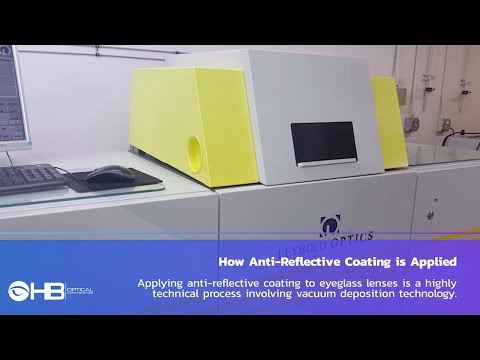
The anti reflective coating process often employs electron-beam evaporation or magnetron sputtering to deposit alternating layers of low- and high-index materials such as SiO₂ and TiO₂, achieving reflection suppression across the visible spectrum while maintaining durability.
| Aspect | Consideration |
|---|---|
| Application | Reduce reflection, enhance readability of displays on ovens, refrigerators, washers, etc. |
| Substrate Choices | Soda lime, aluminosilicate, borosilicate, fused silica, sapphire – each balancing cost, strength, and thermal needs. |
| AR Coating | Single or double-sided dielectric stacks, typically MgF₂ or multilayer SiO₂/TiO₂, applied via PVD. |
| Optical Performance | Target transmittance >94% (double-sided) with <1% reflectance over visible range. |
| Mechanical & Edge Finishing | Cut to size, ground edges with safety chamfers; options for screen printing and mask openings. |
| Integration | Adhesive bonding with optically clear adhesive; consideration for touch sensor air gap or direct lamination. |
| Supply Chain | Plan for coating lead times of 4–6 weeks; protective packaging required; safety stock recommended for long-life appliances. |
Request Engineering Support for Your Appliance Touch Screen Glass
Our team helps you translate display brightness targets, mechanical enclosure constraints, and certification requirements into a manufacturable AR coated glass specification. Send your drawings or a short brief to begin the technical discussion.
Frequently Asked Questions
How does AR coating improve appliance touch screen readability?
AR coating reduces surface reflections through destructive interference, allowing more light to pass through the glass. This makes display content appear brighter and clearer, even under strong ambient lighting such as kitchen spotlights or sunlight.
What glass types are suitable for AR coated appliance touch screens?
Common substrates include chemically strengthened aluminosilicate for high-end impact resistance, soda lime glass for cost-sensitive indoor appliances, and borosilicate for high-temperature interfaces like ovens. Each can receive an AR coating tailored to the application's thermal and mechanical demands.
Can the AR coating withstand cleaning chemicals used on kitchen appliances?
Yes, modern multilayer AR coatings are chemically resistant to typical household cleaners when applied with a durable top layer. However, abrasive pads or harsh solvents should be avoided, as they can scratch the coating surface over time. Manufacturer guidelines for cleaning should be followed.
What is the typical lead time for custom-sized AR coated cover glass?
Lead times vary by coating complexity and order volume. Standard AR coated parts often ship within 3–5 weeks after drawing approval. Custom dielectric stacks or additional printing may extend this to 4–6 weeks or more. Early engagement with the manufacturer helps align with production schedules.
Is the AR coating applied to one side or both sides for appliance displays?
It depends on the optical design. A single-side coating is common when the back surface is bonded with an optically clear adhesive, reducing internal reflections. Double-side coating is preferred when both glass-air interfaces are exposed, maximizing overall light transmission and minimizing ghost images.