
KRISS Reveals Rack-Mounted Single-Photon Source at Room Temperature
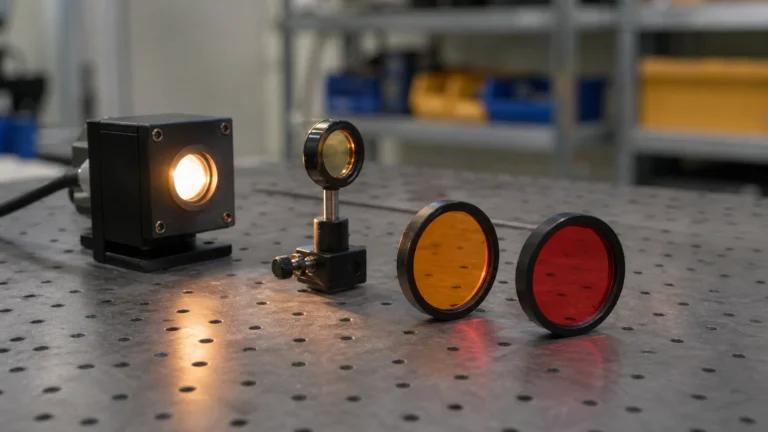
The Korea Research Institute of Standards and Science (KRISS) has engineered a room-temperature single-photon source that fits into a standard 19-inch rack enclosure, removing the need for cryogenic cooling systems that have long constrained quantum technology deployment. The device operates as a plug‑and‑play unit – emitting single photons as soon as it is switched on – and is designed to bring quantum light sources out of controlled laboratory environments and into real‑world infrastructure.
Break from cryogenics
Liquid‑helium dewars and closed‑cycle cryostats have long been necessary for single‑photon sources based on quantum dots, color centers, or parametric down‑conversion sources optimized for high purity. These systems demand regular maintenance, consume significant laboratory floor space, and introduce mechanical vibrations that can disturb sensitive optical paths. KRISS’s room‑temperature solution removes that entire layer of complexity. By operating at ambient conditions, the source can be installed in locations where cryogenic infrastructure is impractical or too costly, such as remote telecom huts or standard server rooms.
Standard rack integration
Mounting the source in a 19‑inch rack chassis that conforms to the EIA‑310 standard means it can immediately be deployed in millions of existing racks worldwide. The unit draws power from standard AC supplies and emits single photons through a fiber‑optic interface as soon as it is turned on—no optical alignment, no temperature ramping, and no manual tuning required. This plug‑and‑play behavior is a departure from laboratory sources that often need hours of stabilization before producing usable photon statistics. The advance supports integration of quantum light sources into Optics & Photonics systems, where reliability and compact form are critical.
Moving quantum technology beyond the laboratory
Optics & Photonics News noted that the plug‑and‑play nature of the device targets the classical‑to‑quantum transition, where fixed installations need to operate reliably without the presence of a PhD‑level scientist. In quantum key distribution (QKD), for example, a service provider could place the rack‑mounted source at a central office and connect it directly to existing fiber plant. The source’s on‑demand photon emission would enable continuous key generation, with the room‑temperature operation eliminating the need for liquid‑helium deliveries or complex cooling water circuits. Similarly, in quantum random number generators used for cybersecurity, the rack format allows easy integration into standard server racks, where multiple entropy sources can be pooled for high‑throughput applications.
Implications for quantum infrastructure standards
Several international bodies, including the International Telecommunication Union (ITU) and the European Telecommunications Standards Institute (ETSI), are developing framework documents for quantum‑safe networks. Equipment that occupies standard rack space and plugs into existing power and fiber infrastructure aligns with those evolving standards. The KRISS device, by demonstrating that a ready‑to‑use single‑photon source can meet those physical requirements, provides a reference design that may influence procurement specifications for quantum network equipment. Government research institutes in South Korea have already begun incorporating quantum‑native hardware into national backbone projects, and the rack‑mount form factor could accelerate that integration.
Technical approach
Although KRISS has not publicly detailed the emitter technology, room‑temperature single‑photon emission is often achieved with defect centers in wide‑bandgap materials, such as silicon‑vacancy centers in diamond or color centers in hexagonal boron nitride. These solid‑state emitters can maintain stable emission rates and photon purity at ambient temperature when placed in suitably designed optical resonators or nano‑antennas that funnel emission into a single spatial mode. The KRISS team appears to have mastered the packaging necessary to maintain that stability inside a vibration‑ and temperature‑cycling‑prone environment of a data center, a significant step beyond benchtop demonstrations.
Applications across quantum domains
Beyond QKD and random number generation, room‑temperature single‑photon sources are valuable for quantum‑enhanced imaging and microscopy, where their emission statistics can beat classical shot‑noise limits. In metrology, they serve as calibrated light sources for testing single‑photon detectors, a role that aligns directly with KRISS’s mission as a national standards institute. The availability of a turn‑key, rack‑mount source makes it easier for other laboratories and companies to benchmark their detectors without maintaining their own cryogenic setups.
Summary of key features
| Aspect | Details |
|---|---|
| Developer | Korea Research Institute of Standards and Science (KRISS) |
| Device type | Single‑photon source |
| Operating temperature | Room temperature (no cryogenic cooling) |
| Form factor | 19‑inch rack‑mount chassis |
| Key attribute | Plug‑and‑play operation upon power‑on |
| Target environments | Data centers, telecom exchanges, distributed quantum networks |
The Korea Research Institute of Standards and Science continues to develop measurement infrastructure for next‑generation technologies, and this single‑photon source represents a step toward standardizing components for the quantum era.
Why This Matters
This development lowers the barrier for deploying quantum technologies in existing infrastructure. By eliminating the need for cryogenic cooling and fitting into standard server racks, the source enables scalable quantum key distribution networks, random number generation, and metrology without specialized facilities or personnel. It represents a step toward commodity quantum components that can be plugged into data centers and telecom exchanges as easily as classical networking modules.
FAQ
Who developed the room-temperature single-photon source?
The device was developed by the Korea Research Institute of Standards and Science (KRISS), South Korea’s national metrology institute. KRISS focuses on creating measurement standards and reference instruments for emerging technologies, including quantum systems.
What makes this single-photon source different from previous ones?
Unlike conventional single-photon sources that require cryogenic cooling to near absolute zero, this KRISS device operates at room temperature. It is packaged in a standard 19-inch rack-mount chassis and works as a plug-and-play unit—emitting single photons as soon as it is powered on, with no alignment or cooling needed.
Why is room-temperature operation important for quantum technologies?
Cryogenic cooling adds substantial bulk, cost, and maintenance demands, which have limited single-photon sources to laboratory settings. Room-temperature operation allows the source to be deployed in data centers, telecom exchanges, and other field environments where cryogenic infrastructure is impractical, accelerating real-world adoption of quantum communication and sensing.
What applications could benefit from this rack-mountable source?
The source is suited for quantum key distribution, quantum random number generation, testing single-photon detectors, and quantum-enhanced imaging. Its rack-mount form factor makes it a candidate for standardizing quantum network equipment in existing telecommunications and computing facilities.
Sources
- Korea Research Institute of Standards and Science (KRISS) (kriss.re.kr)
- Optics & Photonics News (optica-opn.org)
Source: Optics & Photonics News – Optics, Photonics, Physics News