
Laser Authentication Device Achieves Near-Zero False Matches
Key Data Points
This story reports a measured change such as 0.1%. Figures like this show direction and scale, so it helps to keep them separate from the surrounding commentary.
- Change / rate: 0.1% Performance metrics and comparative advantage AR coated glass, anti reflective optical glass, optical coating glass The headline metric is the false positive rate, which the developers describe as “near-zero.” While exact figures…
For decades, digital authentication systems have battled with an inherent trade-off: convenience versus reliability. While passwords, PINs, and even biometric scanners offered a baseline of security, false positives—where an unauthorized user is incorrectly granted access—remained a persistent vulnerability. A newly detailed laser-based device upends this compromise, delivering real-time authentication with a false positive rate so low it approaches statistical irrelevance.
Optical interrogation at the core
The system operates by projecting a highly coherent laser beam onto a target surface—be it an identity card, a product label, or a physical token—and analyzing the reflected speckle pattern. Each surface possesses a unique microtopography, essentially an optical fingerprint, which the device can capture and compare against a stored template in milliseconds. Unlike conventional barcode or magnetic-stripe readers that rely on static data, this approach exploits the intrinsic randomness of the material structure, making replication extraordinarily difficult.
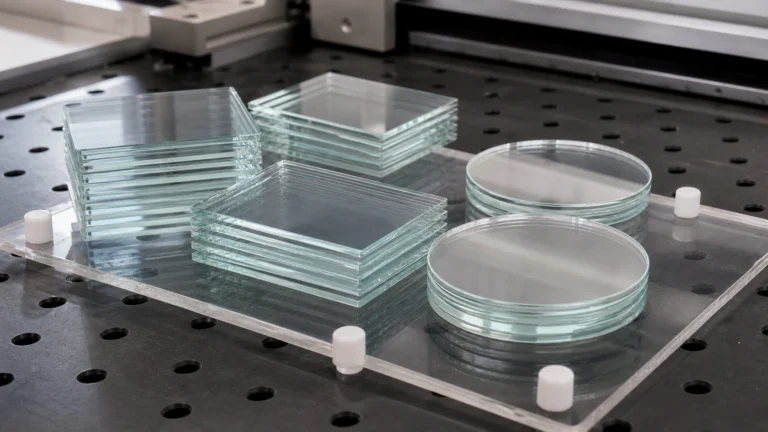
To maintain beam quality and measurement accuracy, the optical train may include precision elements such as an anti reflective optical window and quartz glass sheets. These components minimize stray reflections and preserve the wavefront fidelity needed for high-resolution speckle imaging.
Performance metrics and comparative advantage
The headline metric is the false positive rate, which the developers describe as “near-zero.” While exact figures have not been publicly disclosed at this early stage, even the most advanced biometric systems, such as iris or fingerprint scanners, typically exhibit false acceptance rates on the order of 0.1% to 0.001% under controlled conditions. In mass deployments, these numbers translate to thousands of erroneous authentications per day. Cutting that rate by several more orders of magnitude would effectively eliminate one of the most exploited attack vectors in physical and logical access control.
Equally important is the device’s scalability. The underlying algorithm is lightweight enough to run on embedded processors, meaning a single server can manage authentication queries from thousands of readers simultaneously without introducing latency. This capability contrasts with some high-assurance biometric solutions that require dedicated hardware accelerators or cloud connectivity for each verification attempt.
Standards alignment and regulatory context
For any authentication technology to gain traction in government, finance, or critical infrastructure, it must align with established testing and certification frameworks. The National Institute of Standards and Technology (NIST) and the International Organization for Standardization (ISO) publish detailed performance evaluation methodologies, such as the ISO/IEC 19795 series for biometric testing and the NIST Special Publication 800-63 for digital identity guidelines. A system claiming near-zero false positives would need to undergo extensive third-party evaluation under these protocols to substantiate the claim.
Early indications suggest the developers are preparing datasets for submission to relevant testing bodies. If the claimed performance holds, the device could set a new benchmark in the false-acceptance-rate category, influencing future revisions of these standards.
Deployment scenarios
The versatility of laser-based authentication allows it to be integrated into a wide range of applications:
- Secure facility access: Replacing RFID badges with tamper-proof laser-readable tokens that cannot be cloned.
- Document verification: Authenticating passports, visas, and certificates by reading the intrinsic surface structure of paper or security laminates.
- Supply chain integrity: Tagging high-value goods with laser-readable microstructures to combat counterfeiting.
- Financial transactions: Adding a hardware-rooted authentication factor that complements traditional PINs or biometrics for high-value transfers.
Because the authentication primitive is physical and non-reproducible, it addresses a fundamental weakness of knowledge-based and possession-based factors.
What this means for the authentication landscape
The introduction of a practical, scalable system with near-zero false positives could reshape the hierarchy of authentication factors. In environments where false acceptance is catastrophic—such as nuclear facility access, air-gapped network logins, or national identity databases—the laser device could become the reference standard. Moreover, its real-time operation removes the usability friction often associated with multi-factor authentication, potentially accelerating adoption in consumer-facing services.
As detailed in Optics and Photonics News, the technology represents a significant step toward optical authentication systems that are both highly secure and operationally practical.
Key specifications at a glance
| Aspect | Current Status | Implication |
|---|---|---|
| Authentication method | Laser speckle pattern analysis of surface microtopography | Exploits unique, non-reproducible physical features |
| False positive rate | Near-zero (specific value pending independent validation) | Eliminates a critical vulnerability in logical and physical access |
| Processing speed | Real-time, compatible with embedded processors | Enables scalable, low-latency deployment across large networks |
| Standards alignment | Data ongoing preparation for NIST and ISO evaluation | Required for adoption in regulated sectors |
| Primary applications | Access control, document verification, anti-counterfeiting, banking | Broad potential across government, finance, and supply chain |
The laser-based digital security system demonstrates that near-zero false positive authentication is achievable outside laboratory settings, opening new possibilities for high-assurance identity verification.
Why This Matters
By virtually eliminating false positives, the device addresses a long-standing failure point in authentication systems, potentially reducing fraud and unauthorized access in sensitive sectors such as finance, government, and critical infrastructure. Its scalability suggests it could be deployed widely without sacrificing performance, marking a significant advance over current optical and biometric methods.
FAQ
What is the laser-based digital security system?
It is a new device that uses laser technology to perform real-time authentication with extremely high accuracy, achieving near-zero false positive rates.
How does the device achieve near-zero false positives?
The device employs advanced laser-based techniques, likely analyzing unique optical microstructures or speckle patterns, to verify identity or documents with minimal error.
What industries could benefit from this technology?
Potential applications include secure access control, financial transactions, government ID verification, and anti-counterfeiting measures where reliable authentication is critical.
Is the system scalable for large deployments?
According to the developers, the system is designed for scalability, meaning it can be deployed across large organizations or networks without degradation in performance.
Sources
- National Institute of Standards and Technology (nist.gov)
- International Organization for Standardization (iso.org)
- Optics and Photonics News (optica-opn.org)
Source: Optics and Photonics News RSS